Blog
How to Clean a Leather Jacket at Home
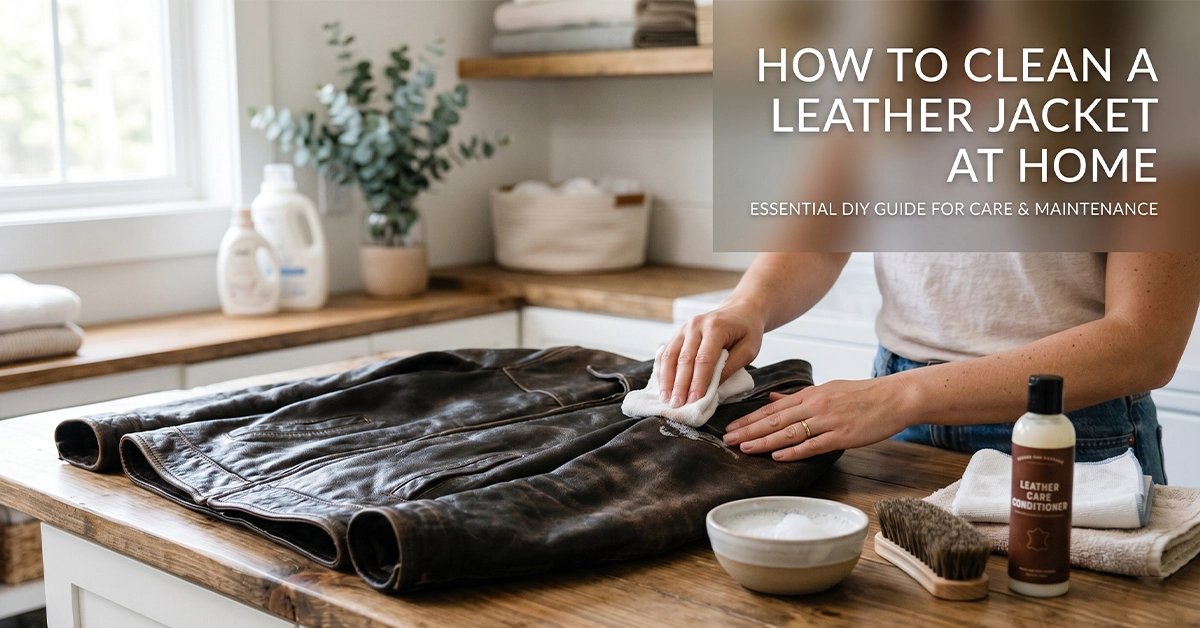
The internet does not help. They will advise washing machines, dish soap, make-up remover wipes. Most of this will destroy your jacket quicker than the stain. Leather is not a cloth. It is processed skin. It is porous, absorptive, and reactive – chemically – to whatever you put on it. Treating it like a cotton tee is how you end up with a cracked, faded, dead hide.
Here’s what we already know from the repair-over-replace movement: the Ellen MacArthur Foundation estimates that doubling the number of times a garment is worn could reduce greenhouse gas emissions from clothing by 44%. When it comes to leather, this logic hits even harder. If well cared for, a hide can outlast its owner. 73% of fashion brands invested in circular economy initiatives in 2025 – for leather owners, that ethic starts at home, with a horsehair brush and a tin of conditioner.
Quick Reference: Emergency Fixes by Stain Type
| Problem | Immediate Fix | What NOT to Do |
| Water Spots | Dampen the whole panel evenly with a damp cloth; air-dry flat away from heat. | Do not blow-dry or leave the spot to dry on its own – it will ring permanently. |
| Grease / Oil | Dust cornstarch or talcum powder on the stain; leave 4–6 hours; brush off gently. | Do not rub – you will drive the oil deeper into the pores. |
| Odor / Sweat | Hang inside-out in fresh air 24–48 hrs; stuff lining with baking soda overnight. | Do not spray cologne or fabric freshener directly on leather. |
| Mud / Dirt | Let it dry completely first, then brush off with a soft horsehair brush. | Do not wipe wet mud – it smears and permanently stains the nap. |
| Ink / Scuffs | Dab with a barely damp cloth and leather cleaner; for ink, isopropyl on a cotton swab – very lightly. | Do not use nail-polish remover or bleach wipes. Either will strip the dye. |
How to Clean a Leather Jacket: Step-by-Step
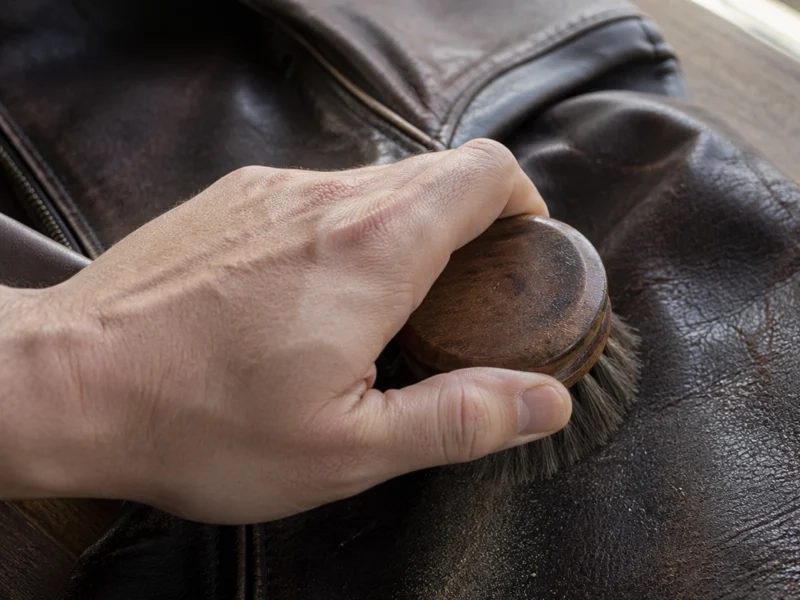
Step 1 – The Dust-Off: Brushing Out the Seams and Zippers
Tools needed: A horsehair brush. That is it. No other tools needed for this step.
It’s best to begin with the jacket lining. Shake it out to remove any debris. Then flip it right-side out and work the horsehair brush in long, smooth strokes along the grain of the hide – not against it. Pay attention to the seams, the zipper channels, and the collar underside. That is where dead skin cells, salt residue, and dust compact into a fine layer of grime most people never touch.
There will be a slight scratching sound as the bristles move across dry leather. That is normal. What you are listening for is whether the hide sounds hollow or brittle – like brushing over dry paper. That is early-stage dry rot. It means your conditioner step later in this process is not optional.
This matters because surface debris acts as a micro-abrasive. Every time you wear a dirty jacket, you are essentially sandpapering the finish from the inside out. The types of leather jackets you own will also determine how aggressive you can be here – full-grain hides can take a firmer brush pass than a pull-up or suede.
Step 2 – The Spot Test: Aniline vs Semi-Aniline Finishes
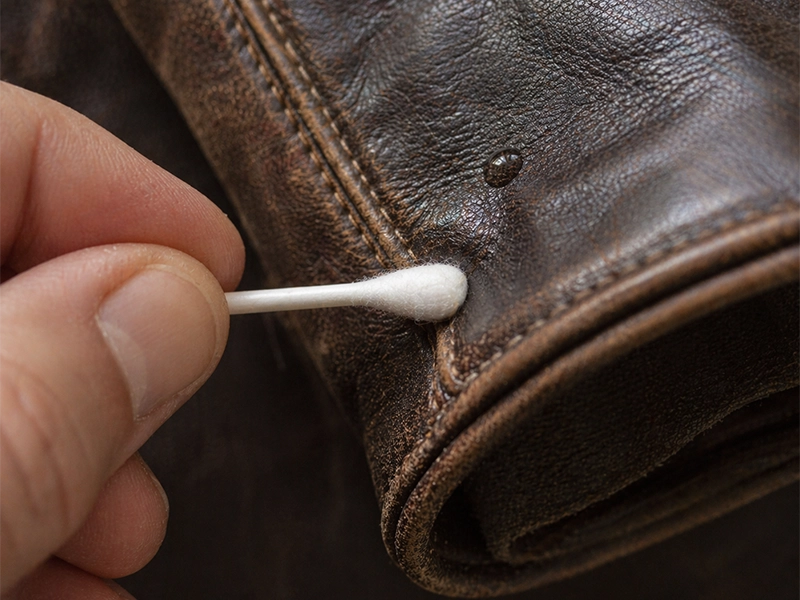
Tools needed: A cotton swab, distilled water, a hidden interior seam.
This step saves jackets. Always do it. Test the jacket by putting a drop of distilled water on an inconspicuous part – inside the cuff, inside the collar seam – and watch what happens after 30 seconds. If it darkens and stays dark, you have aniline leather: no protective coating, fully porous, highly absorbent. If the water beads or evaporates cleanly, it is semi-aniline or pigmented-coated, and you have more margin for error.
Aniline hides are the most beautiful. But they are the most unforgiving. Any liquid – including water – applied unevenly will leave a tide mark. Be patient, keep everything evenly damp, and never let one section dry while another is still wet. With semi-aniline or top-grain finishes, you can use a bit more moisture without the same concern.
Not sure what you have? If you purchased one of our premium leather jackets, the product page will specify the hide type and finish. If you bought elsewhere and the label says nothing – assume aniline and proceed with caution.
Step 3 – The Wash: Saddle Soap and Gentle Leather Cleaner
Tools needed: Saddle soap or pH-neutral leather cleaner, two clean microfibre cloths, lukewarm water.
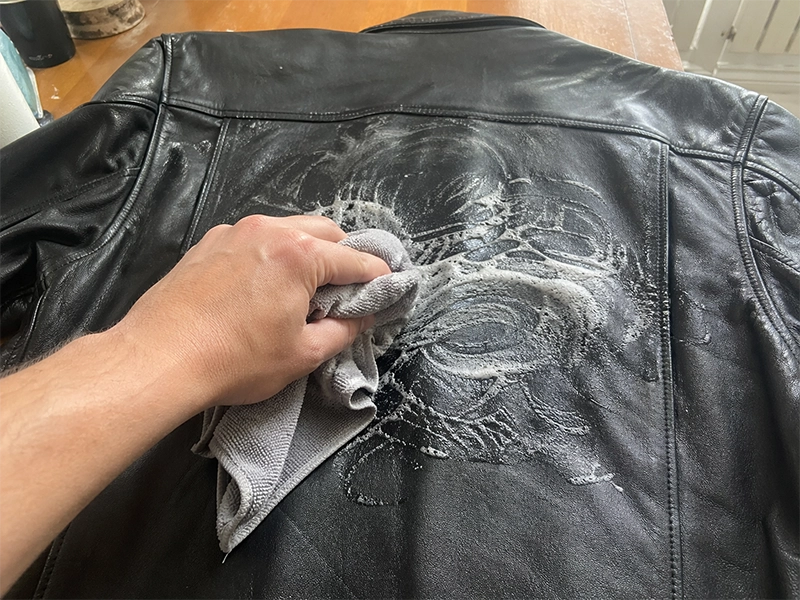
Work in sections. Wet one cloth until it is barely damp – not dripping – and work a small amount of saddle soap into a light lather on the cloth first, never directly on the jacket. Then apply to the leather using small, circular motions. Moderate pressure. You’re not cleaning grout. The goal is to lift surface grime from the pores without stripping the natural oils embedded in the hide.
I once picked up a 1990s brown bomber at an estate sale – almost black from decades of city grime. After three rounds of saddle soap (15 minutes of work per section), the original cognac-brown started showing through. The smell that came off it was extraordinary: heavy, waxy, like old tack rooms. That is what properly cleaning real leather smells like. If your cleaning session smells like nothing, you have a faux leather jacket – and PU or bonded materials will peel, not restore.
Wipe off the lather with the second clean cloth immediately. Do not let saddle soap dry on the surface – it will leave a white residue and begin pulling moisture from the hide. Work one panel at a time: back, left front, right front, sleeves.
Step 4 – The Hydration: Conditioning Without Clogging the Pores
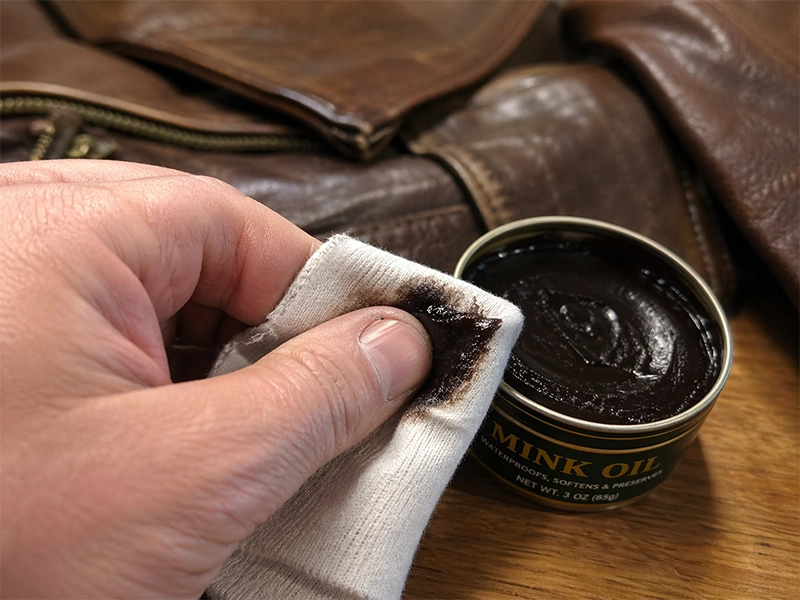
Tools needed: Leather conditioner (mink oil, neatsfoot oil, or a modern beeswax-based conditioner), a clean lint-free cloth.
Wait until the jacket is completely dry from the wash step before conditioning. Even 10 minutes of impatience here will trap moisture under the conditioner layer and cause mildew. Once dry, put a pea-sized amount of conditioner on your cloth – not the jacket – and work it in using slow, circular movements. The leather should absorb it almost immediately. If it sits on the surface looking greasy, you have applied too much. That sticky, heavy residue clogs the pores and prevents the hide from breathing.
Mink oil is the classic. It deepens the colour and leaves a satisfying, slightly waxy smell – rich and animal, like the inside of a tannery. It will darken lighter hides like beige or honey-brown, so test first. For black leather jackets or brown leather jackets, darkening is rarely an issue and often improves the look.
This step directly addresses how to fix dry leather. The porous structure of full-grain hide loses its natural lipids through wear, heat, and cleaning. Conditioner replaces them, restoring flexibility and preventing the cracking that starts at stress points – elbows, zipper edges, the shoulder seams. Think of it as moisturising your own skin: skip it long enough and you will see the damage.
Step 5 – The Cure: Air-Drying Without Heat or Sunlight
Tools needed: A padded, wide-shoulder hanger. Nothing else.
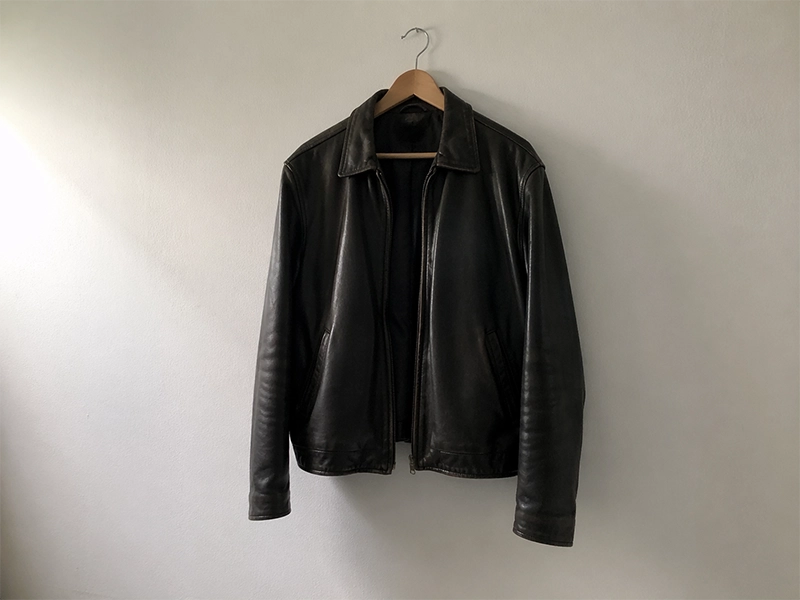
Use a proper hanger – not a wire one. Wire hangers distort the shoulder shape permanently. A padded or wooden hanger that fills the shoulder allows the jacket to dry in its natural silhouette. This matters more than most people think.
Hang it somewhere with good air circulation but no direct sunlight and no direct heat. Away from radiators. Away from heated clothing racks. Away from the tumble dryer running nearby. Heat dehydrates the hide faster than it can recover, pulling the last remaining natural oils to the surface and leaving a chalky, stiff finish. UV light bleaches and weakens the dye layer – especially on aniline finishes that have no pigment coat protecting them.
For men’s leather outerwear in heavier weights, allow a full 24 hours before wearing. It takes time for the hide to draw in the conditioner evenly. Wearing it while still slightly damp causes the leather to stretch unevenly across stress points and sets wrinkles that are very difficult to remove.
The Leather Care Don’ts That Will Ruin Your Jacket:
- The washing machine. Full stop. The washing cycle physically tears the fibre structure of the hide. The water penetrates every pore simultaneously and expands the leather unevenly. The spin cycle wrings moisture out in ways that permanently crease and distort the shape. You will pull out something resembling a leather crisp.
- Heat drying. Radiators, hair dryers, heated racks – all of them accelerate dehydration and crack the hide at its stress points. The shoulders and elbows go first. Let it air dry. Always.
- Baby wipes and alcohol wipes. You’re stripping the dye with every pass. The surfactants in wet wipes are formulated for skin, not hide. On aniline or semi-aniline leather, repeated use will leave pale, patchy areas that no conditioner can reverse. Stop.
- The dry cleaner. A standard dry cleaner will bake the life out of the hide with their solvent heat process. If you must go professional, find a specialist leather cleaner – not a general dry-cleaning service that claims to ‘do leather.’ Those are not the same thing.
- Over-conditioning. More is not better. Applying thick layers of mink oil or neatsfoot oil clogs the pores, makes the jacket heavy and greasy, and creates a surface that attracts dust and lint. Once every three to six months is enough for most jackets.
- Storing in a plastic bag. Plastic traps humidity and cuts off airflow. Mildew follows. Store your leather in a breathable cotton garment bag in a cool, dry place.
Leather Jacket Care FAQs
How do I remove a vintage or musty smell from a leather jacket?
Turn the jacket inside out and hang it in fresh air for 48 hours first – that alone resolves most odours. For stubborn musty smells embedded in the lining, fill a small spray bottle with cheap vodka (not flavoured), mist the inside lining lightly, and allow to air dry completely. Alternatively, place the turned-out jacket in a sealed bag overnight with an open container of baking soda. Neither method touches the leather itself, which is exactly the point – keep moisture away from the hide.
Can I fix a peeling leather jacket?
If your jacket is peeling, it is not real leather. Full-grain or top-grain hide does not peel – it cracks, fades, or dries, but the fibre structure holds. Peeling is the signature failure mode of PU/faux leather – a plastic coating bonded to a fabric base that delaminates over time. There is no permanent repair for delaminated PU. Leather filler kits can mask it temporarily, but the underlying cause is a structural failure in a synthetic material, not a leather problem.
How often should I condition my leather jacket?
Two to four times per year for a jacket worn regularly in temperate climates. If you are in a dry, hot climate like the Middle East or American Southwest, move to every six to eight weeks during summer – heat accelerates moisture loss significantly. If you wear the jacket daily and it gets wet frequently, condition after every two to three wearings. The test is tactile: if the leather feels slightly stiff when you flex the sleeves, it needs conditioning. Do not wait for visible cracking.
Does getting caught in the rain ruin a leather jacket?
Getting caught in a light drizzle won’t instantly ruin your leather jacket, but soaking it can cause damage if not dried properly. If your jacket gets wet, gently wipe off the excess water with a dry towel. Hang it on a wide, padded hanger and let it air dry naturally at room temperature.
Can I use baby wipes to clean my leather jacket?
No, avoid using baby wipes or standard cleaning wipes on leather. Most wipes contain alcohol, fragrances, and chemicals that can strip the protective topcoat and dry out the leather, leaving it vulnerable to cracking and discolouration.
The Patina Movement in 2026: Why Worn Leather Is Having a Moment
The perfectly clean leather jacket is, quietly, becoming an amateur tell. Among people who know hides – leatherworkers, collectors, the heritage menswear crowd – a jacket with no scuffs, no character marks, no earned colour shift reads as either new or fake. The real thing develops patina.
Patina occurs when the full-grain leather is worn, cleaned properly, and conditioned over years. The hide darkens at friction points – the collar, the cuffs, the elbow creases. Lighter areas develop where sunlight hits. The surface softens and takes on a depth that cannot be manufactured. It is the leather equivalent of a well-seasoned cast-iron pan or a worn leather saddle. The material becomes more itself over time, not less.
Style forecasters heading into 2026 consistently identify exclusivity, uniqueness, and anti-trend positioning as the dominant consumer signals. A heavily distressed, well-maintained heritage leather jacket – one with visible history – is the antithesis of the fast-fashion cycle. You cannot fake 10 years of proper use. You cannot buy that look off a rack.
This is exactly why how to style a black leather jacket in 2026 increasingly means styling one that looks lived-in. Paired with the right pieces, a jacket showing honest wear carries more visual authority than a pristine one. The maintenance work you put in – the brushing, the saddle soap, the careful conditioning – is not about keeping it spotless. It is about keeping it alive. There is a difference.
Browse our full range of premium leather jackets – or explore our dedicated men’s leather outerwear collection – each sourced and constructed to take exactly this kind of care.



- Harley Davidson Collection14 products
- Harley Davidson11 products
 Leather Jackets for Men and Women466 products
 Leather Biker Jackets For Women35 products
 Black Leather Jackets for Men and Women204 products
 Video Game Jackets56 products
- Yellowstone Jackets20 products
 Blue Leather Jackets for Men and Women26 products