Blog
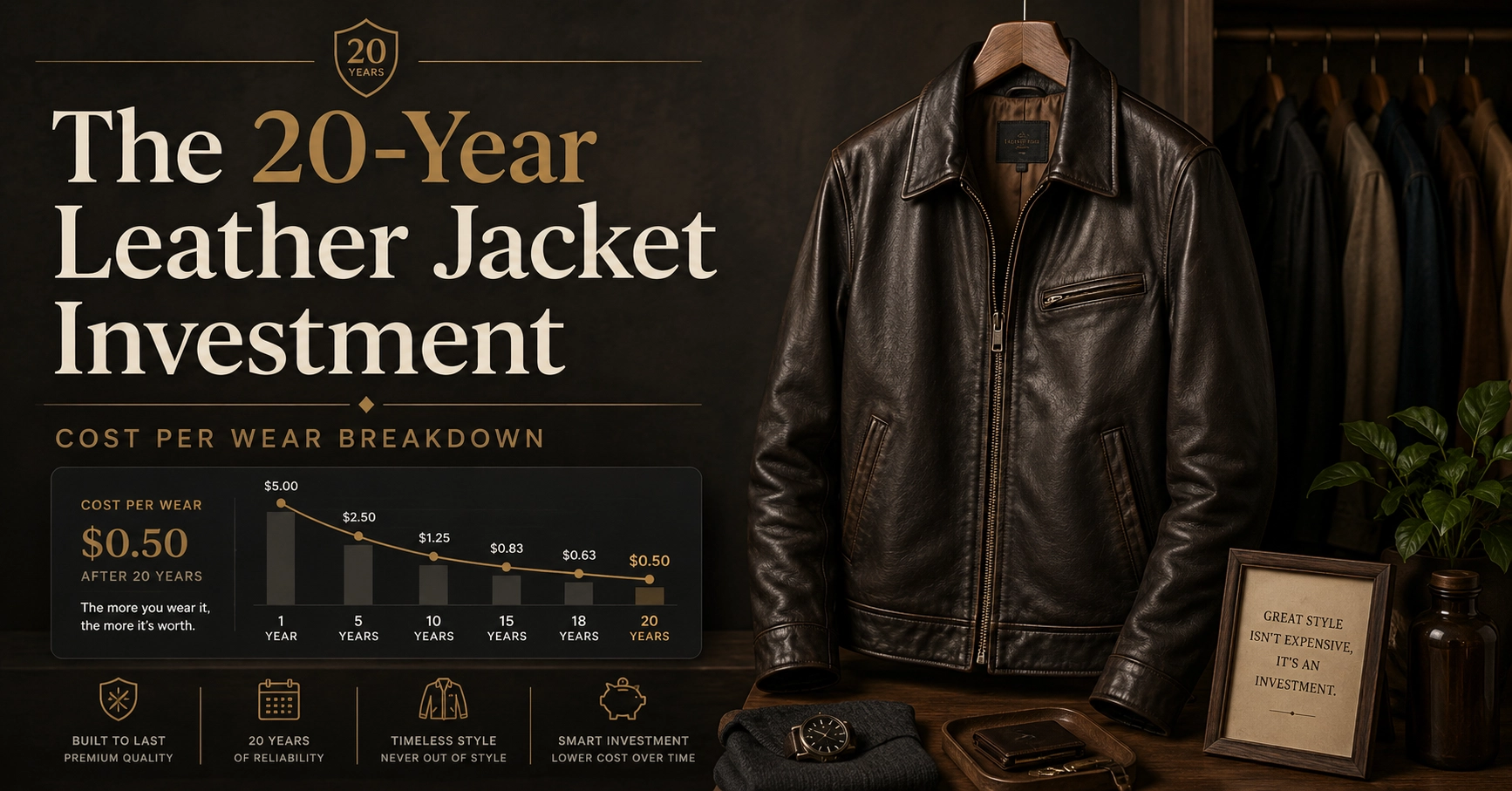
The 20-Year Leather Jacket Investment: Cost Per Wear Breakdown
- What Cost Per Wear Actually Is (And Why It Matters)
- How Long Does a Good Leather Jacket Actually Last?
- The 20-Year Scenario: Real Leather vs Cheap Faux
- The Hidden Costs of the "Cheap Jacket Habit"
- Why Leather Wins Cost Per Wear
- Selecting a Leather Jacket That Can Really Hit 20 Years
- Care & Maintenance: Protecting Your Investment
- CPW & Sustainability: Why Investment Jackets Are Greener
- Real-Life Scenarios: Who Actually Benefits from a 20-Year Jacket?
- FAQs
Yes – in most cases, a leather jacket is a smart 20-year investment.
A well-made real leather jacket can realistically last 10 to 20+ years with basic care, accumulating hundreds of wears over its lifetime. When you divide the purchase price by total wears, that seemingly expensive jacket often costs less per wear than repeatedly replacing cheaper alternatives. Over two decades, quality leather typically wins not only on long-term cost, but also by reducing waste and unnecessary consumption.
You’re standing in front of two jackets. One is $220. Real leather, decent weight, the kind of thing that feels heavy in a good way when you pick it up. The other is $70. Faux, light, fine.
Your hand goes toward the $70 one first. That’s normal. Sticker price is the loudest number in the room.
Here’s where it gets interesting: sticker price isn’t the number that matters. Cost per wear is. Wear the $220 jacket 400 times over its life and it costs about 55 cents per wear. Wear the $70 jacket 40 times before it cracks at the elbows and it costs you $1.75 per wear – more than three times as much, despite being a third of the price. This isn’t a fringe idea anymore, either. A growing number of UK shoppers now say they actively factor cost-per-wear into clothing purchases before they buy, which tells you the calculator-in-your-head approach is going mainstream. If you’d rather skip a few cheap replacements altogether and go straight to something built for the long haul, the leather jackets at Jacketstown are designed with exactly this kind of math in mind.
What follows is a real 20-year scenario. Real assumptions, rounded for clarity, not brand promises. By the end you’ll be able to run this math on your own closet.
Two decades is a long time to live with one decision. A lot can change – your job, your city, your size, your taste. The argument here isn’t that every jacket should be expensive. It’s that a specific category of purchase, the outerwear you’ll reach for hundreds of times, deserves a different kind of math than the $15 t-shirt you’ll wear a dozen times and forget about. Leather jackets sit squarely in that first category, which is exactly why this breakdown focuses on them rather than your whole wardrobe.
What Cost Per Wear Actually Is (And Why It Matters)
Cost per wear, or CPW, is unglamorous on purpose. It’s a formula, not a feeling.
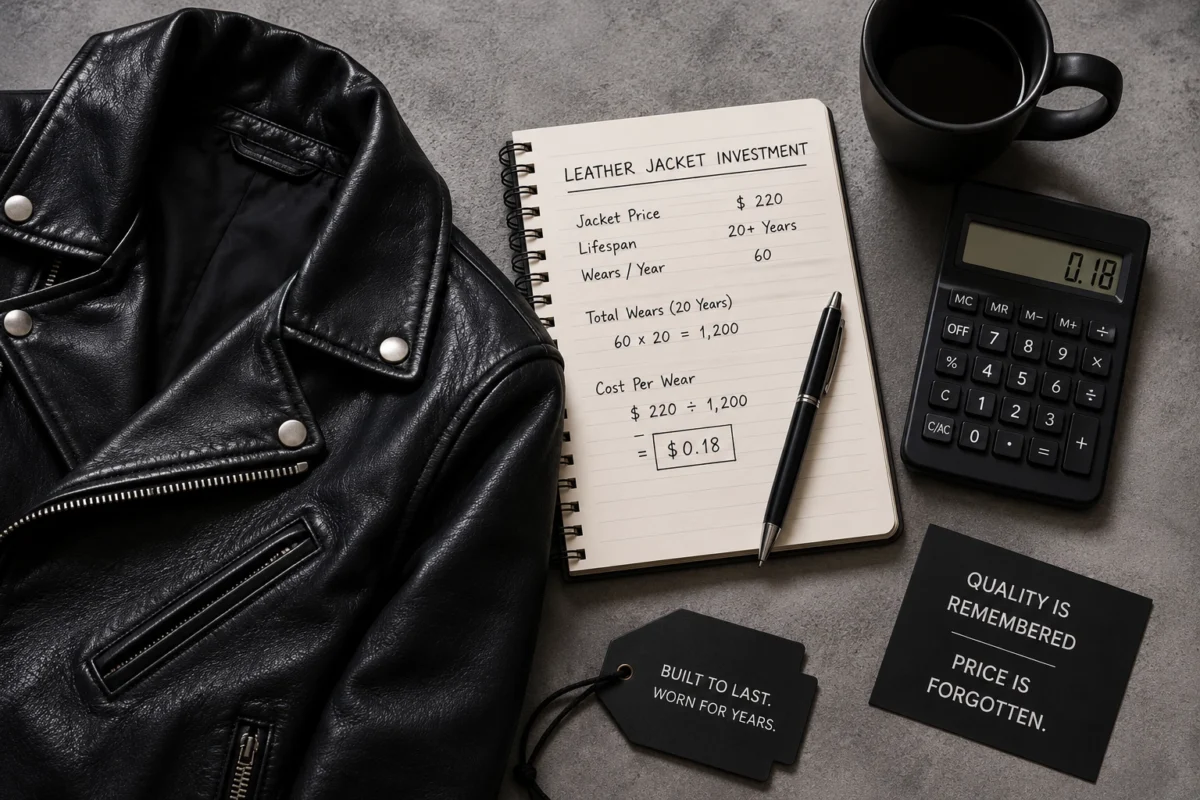
CPW = Purchase Price ÷ (Years of Use × Wears per Year)
A $60 jacket worn 30 times before it falls apart costs $2.00 per wear. A $200 jacket worn 300 times over its life costs 67 cents per wear. Same logic as unit pricing at the grocery store – price per 100g, price per load of laundry. Clothing just rarely gets the same treatment at checkout.
That’s slowly changing. A 2025 study from the University of Bath and Cambridge Judge Business School found that showing shoppers a garment’s cost-per-wear shifted their preference toward higher-quality, longer-lasting pieces, even when the upfront price was higher. The effect was strongest for everyday clothing people actually planned to wear often, not one-off outfits for a single event.
This matters because it reframes sustainability as something other than a guilt trip. It becomes a spreadsheet. Cheap starts to look expensive once you count the failures. (If you want to plug in your own numbers before you buy anything, a basic cost-per-wear calculator takes about thirty seconds.)
 How Long Does a Good Leather Jacket Actually Last?
This is where leather starts to separate itself from almost everything else in your closet.
Full-grain and top-grain leather, kept conditioned and stored properly, can realistically run 10 to 20+ years. A detailed breakdown on leather longevity even argues that full-grain leather can stretch to 20 to 50 years with consistent conditioning and correct storage – the ceiling is set by the hide grade, but care decides whether you actually reach it.
“Well-made” means a few specific things, not vibes:
- Real cowhide or lambskin, not bonded scraps glued together.
- Solid metal hardware. Plastic zips fail. Always.
- Stitching that’s reinforced at the shoulders and cuffs, where stress actually lands.
A jacket worn five days a week needs more conditioning than one worn on weekends – that part’s obvious. Less obvious: storage matters almost as much as wear frequency. A jacket left crushed in a closet for a decade ages worse than one worn regularly and hung properly between outings.
Faux and PU leather live a different life entirely. Peeling and cracking, especially at the elbows and collar fold, typically shows up within 1 to 3 years of regular wear. Once that happens, the CPW clock resets to zero. You buy again. The waste compounds.
The 20-Year Scenario: Real Leather vs Cheap Faux
Let’s put numbers on it.
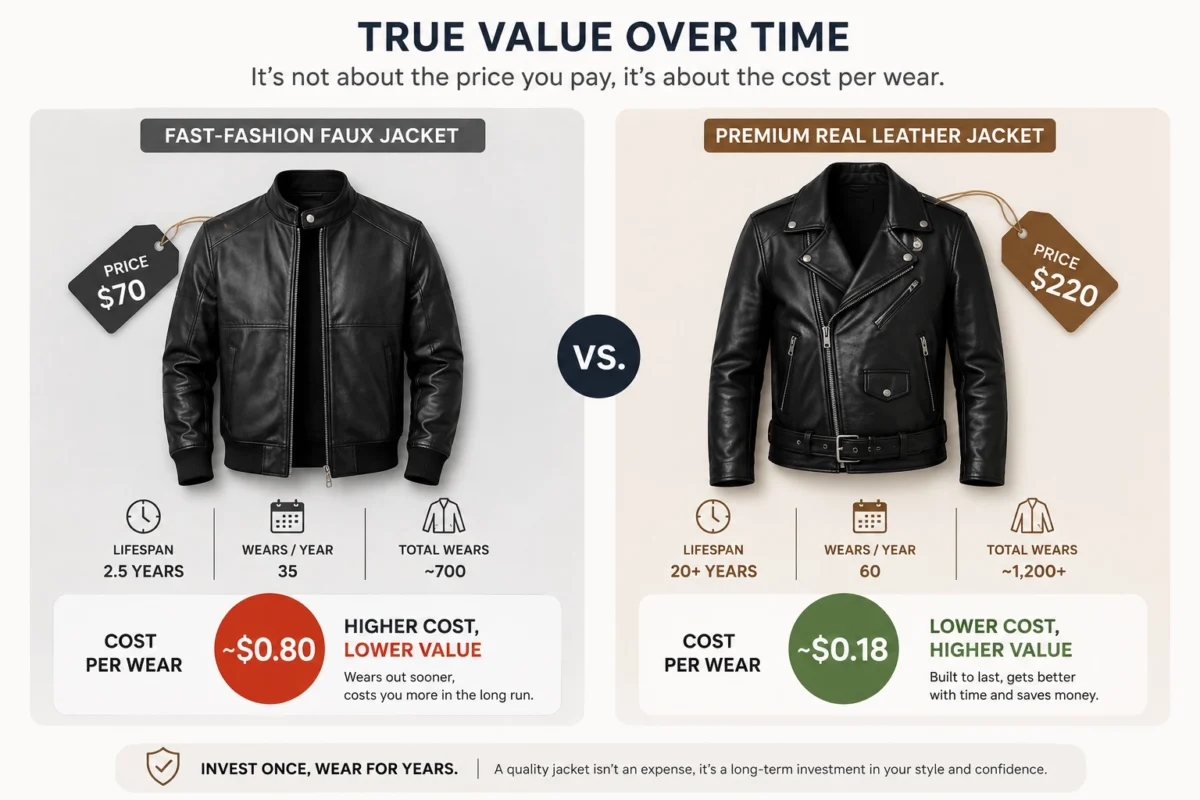
Picture a mid-tier real leather jacket at $220, worn roughly 60 times a year – through commutes, weekend errands, the occasional concert, layered under a coat in winter. Over 20 years that’s 1,200 wears from a single purchase.
Now picture a $70 faux jacket worn about 35 times a year but lasting only 2 to 3 years before it visibly degrades. Over two decades you’re not buying one jacket. You’re buying roughly eight.
| Jacket Type | Approx. Price | Lifespan (Years) | Wears / Year | Total Wears (20 Years) | Approx. Cost Per Wear |
|---|---|---|---|---|---|
| Fast-Fashion Faux Jacket | $70 | 2.5 | 35 | ~700 | ~$0.80 |
| Mid-Range Real Leather | $220 | 20+ | 60 | ~1,200 | ~$0.18 |
Same 20-year window. The “cheaper” jacket costs more than 2.5x as much per wear, and that’s before you count shipping for eight replacements, the time spent shopping for each one, or the landfill weight. Structured black leather jackets built to last sit firmly on the low-CPW side of this table – they’re the archetypal version of the math working in your favor.
The Hidden Costs of the “Cheap Jacket Habit”
The sticker price was never the whole story. It’s just the part you see at checkout.
- The replacement tax. Every 2 to 3 years, you’re back online searching, paying shipping again, waiting for a box. That’s friction you didn’t sign up for.
- The “meh” moment. There’s a specific feeling when a jacket starts peeling and you keep wearing it anyway because replacing it feels like a hassle. It stops feeling good. You notice. So does everyone else.
- The environmental tail. More replacements mean more production, more transport, more landfill. None of that shows up on the price tag, but it’s real and it scales with every cheap purchase you make.
- The style erosion. Wear enough disposable-feeling jackets in a row and you start dressing like everything you own is temporary. That’s a quieter cost than a broken zipper, but it adds up the same way.
- The zipper that dies the week before winter actually arrives.
For a side-by-side breakdown of exactly where synthetic materials lose ground over time, the polyester vs leather jacket comparison walks through the failure points in detail – peeling, breathability, and how each material actually performs under daily wear rather than in a showroom.
Cheap starts to look expensive the moment you count the failures instead of just the first price tag.
Why Leather Wins Cost Per Wear
Leather doesn’t fight time. It works with it.
A real leather jacket softens with wear. It molds to your shoulders, develops creases exactly where your arms bend, and picks up a patina that looks intentional rather than damaged. Faux materials don’t get that grace period – they show wear as failure. Shiny spots. Cracks. A collar that stops sitting right.
There’s a structural side to this too. Good leather resists tearing at stress points and, when something does go wrong, it can usually be repaired – a new zip, restitched lining, a patch at a seam. None of that is true of bonded or PU materials, which are essentially disposable by design.
And here’s the part that compounds quietly: as the jacket looks better with age, you actually want to wear it more. More wears, lower CPW, and the cycle keeps reinforcing itself for as long as you own it.
A real-vs-faux comparison built specifically around how each material ages over years rather than weeks is worth a closer look if you want the full technical breakdown of why this happens at the material level.
Selecting a Leather Jacket That Can Really Hit 20 Years
Not every leather jacket is built for this. Some are built to look good in a single photo and nothing more.
What to actually check:
- Leather type. Full-grain or top-grain for durability. Cowhide if you want toughness, lambskin if you want softness – both can hit the 20-year mark with care.
- Stitching at the seams should be tight and even, with reinforcement at the shoulders and cuffs. Loose threads now mean a torn lining in year three.
- Solid metal zips and snaps. If it feels light and plasticky in the store, it’ll feel worse in year five.
- Lining that’s breathable but not flimsy – overbuilt jackets get hot and uncomfortable, underbuilt ones tear at the armholes.
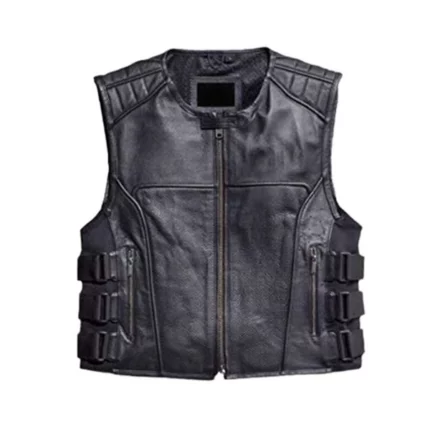
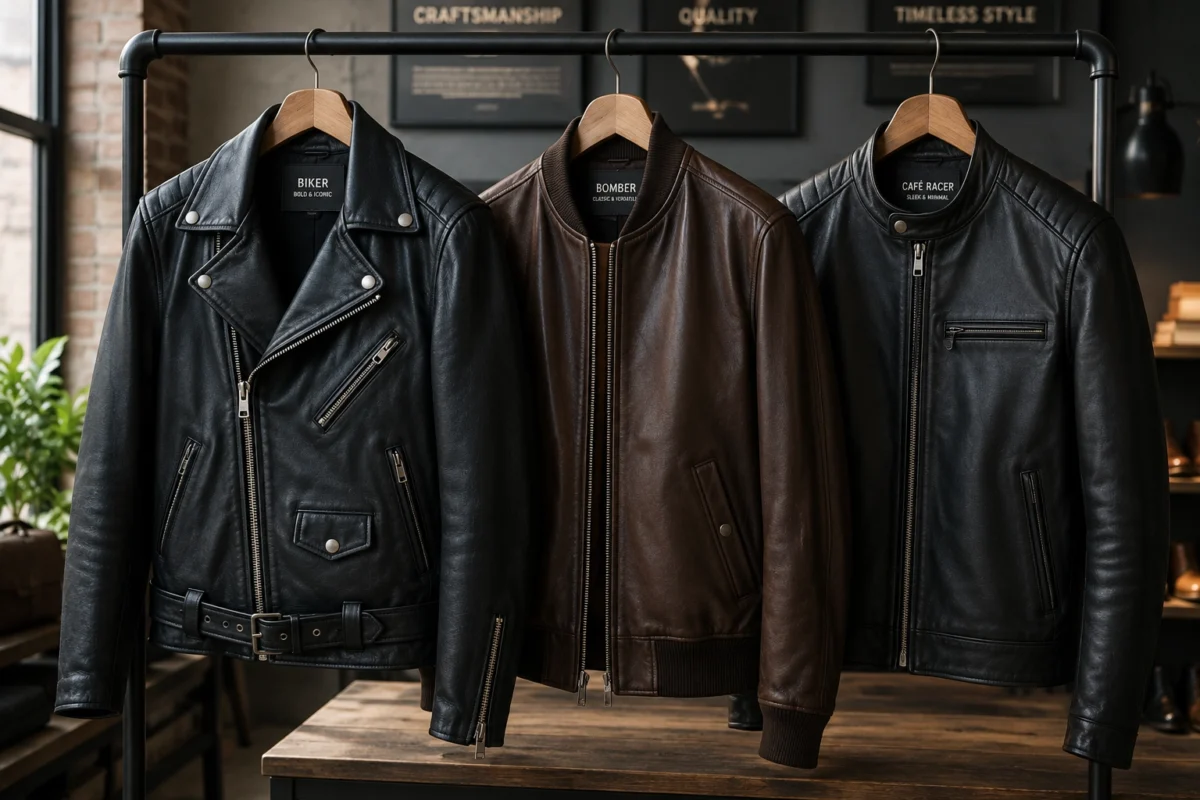
Style matters more than people admit when you’re buying for two decades. Classic patterns – biker, bomber, café racer – age well because they were never chasing a trend in the first place. The biker jackets silhouette in particular has barely changed in seventy years, which is exactly the point.
Ask yourself “will I still want to wear this at 45?” rather than “does this look good this season?” That single question filters out most of the impulse buys.
Fit matters here too, more than people expect. A jacket that’s slightly loose today will probably still work after a few years of wear softens the leather and lets it relax across the shoulders. One that’s tight today only gets tighter as the lining compresses. Buying for the body you have now, with a small allowance for the leather to move, beats buying for a trend you’ll outgrow in eighteen months.
Care & Maintenance: Protecting Your Investment
None of this works without basic upkeep. The good news: it’s genuinely not much work.
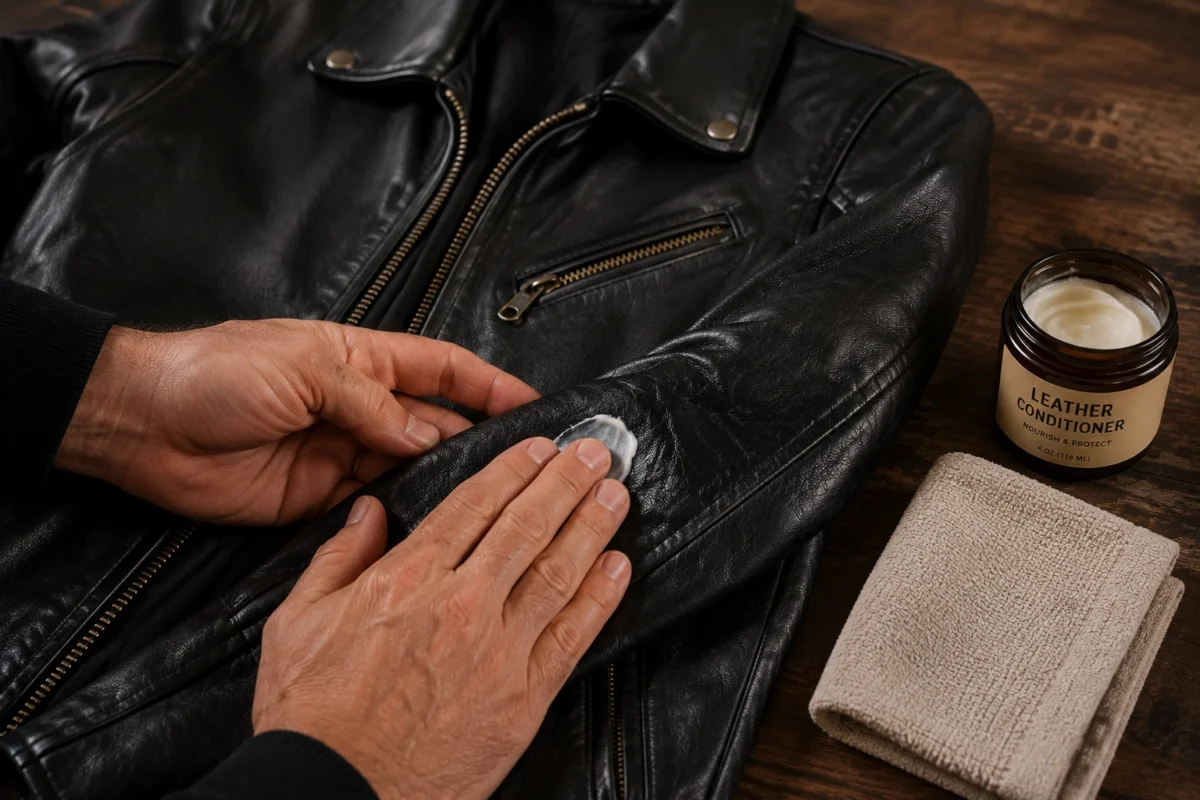
Store it on a wide hanger, away from direct sun, somewhere humidity doesn’t swing wildly. Wipe it down gently rather than scrubbing – harsh chemicals strip the natural oils faster than wear ever will. Condition it once or twice a year depending on your climate; drier air means more frequent conditioning.
A few hours a year. That’s the entire commitment to keep a jacket trending toward decade-plus use instead of toward the landfill. If you want a step-by-step walkthrough, the guide to cleaning a leather jacket at home covers the products and technique without requiring a trip to a specialist.
CPW & Sustainability: Why Investment Jackets Are Greener
This is the part that connects the spreadsheet to something bigger.
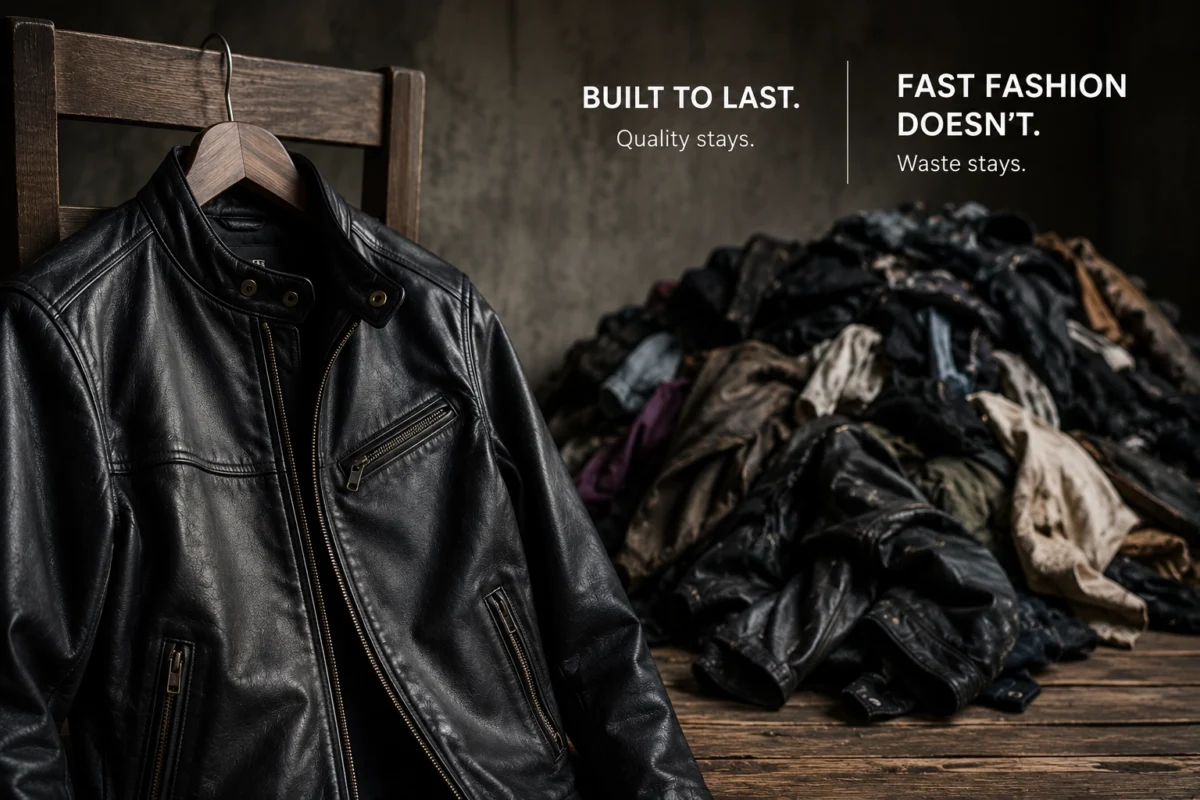
The fashion industry as a whole accounts for a significant share of global carbon emissions and produces enormous volumes of textile waste each year, much of it tied directly to how often garments get replaced rather than repaired. Fewer replacements mean fewer jackets manufactured, shipped, and eventually discarded. One good leather jacket doing the job of eight cheap ones isn’t just a financial win – it’s a measurable reduction in resource use.
Jacketstown’s approach leans into this directly: jackets built to be repaired, not replaced. A loose stitch or a broken zip on a quality piece is a quick fix. On a $70 faux jacket, it’s usually just trash.
Real-Life Scenarios: Who Actually Benefits from a 20-Year Jacket?
CPW logic isn’t universal. It’s strongest in specific situations.
The daily commuter wearing the same jacket through three or four seasons a year benefits enormously – high wear frequency drives CPW down fast. The creative professional who wears one jacket across meetings, travel, and weekends gets the same effect through variety of context rather than raw frequency. The capsule-wardrobe minimalist who deliberately owns fewer, better pieces is essentially optimizing for this metric without calling it that.
Where it weakens: a jacket bought for one wedding, one photoshoot, one occasion that won’t repeat. CPW assumes repetition. Take that away and the math changes completely.
If you fall into the first category, the styling ideas for a black leather jacket are worth a look – versatility across settings is exactly what pushes total wears (and CPW) in the right direction.
Worth doing your own quick math here: estimate how many times a year you’d realistically wear a jacket, multiply by how many years you’d keep it, divide the price by that number. Takes thirty seconds and tells you more than the price tag ever will.
FAQs
Is a $200+ leather jacket really cheaper than a $70 jacket over time?
Usually, yes, once you account for replacements. A $220 jacket worn 1,200 times comes out to roughly 18 cents per wear; a $70 jacket replaced every 2–3 years can land closer to 80 cents per wear across the same period.
How many times do I need to wear a leather jacket for it to “pay off”?
There’s no universal number, but somewhere around 100–150 wears is typically where a quality leather jacket starts undercutting a cycle of cheap replacements. Wear it twice a week for a year and you’re already there.
Can faux leather ever match real leather on cost per wear?
Rarely over a long horizon. Faux jackets tend to fail within 1–3 years regardless of price, which caps their total wears no matter how often you wear them.
What if I change size or style in 10 years – does the investment still make sense?
Often, yes. Classic cuts hold resale value well, and a well-cared-for leather jacket can be gifted, resold, or tailored rather than discarded. That flexibility is part of the investment case.
Is buying second-hand leather better for cost per wear?
It can be significantly better. Resale platform data suggests pre-loved pieces can run roughly 33% more affordable in the long term than buying new fast fashion, since you’re skipping the steepest depreciation and starting from a lower price.
Do sustainable or “ethical” leather jackets cost more – and are they worth the premium?
Often a modest premium, yes. Whether it’s worth it depends on whether the underlying material and construction actually support a long lifespan – a sustainably sourced jacket that lasts 20 years still beats a conventional one that lasts five.
How do I know if a leather jacket brand is worth trusting for a 20-year goal?
Check the leather grade they specify (full-grain or top-grain, named explicitly), look at close-up photos of stitching and hardware, and read reviews from people who’ve owned the jacket for years rather than weeks.
Run the numbers on your own closet sometime this week. Not as a guilt exercise – as a genuinely useful filter. The jacket that costs more today and less per wear over the next twenty years isn’t a splurge. It’s the math working exactly as it should. If it convinced you, the leather jackets at Jacketstown are built around that same premise: pieces meant to be worn hard, repaired when needed, and still looking right a decade from now.