Blog
Leather Jacket Size Guide: How to Find Your Perfect Fit
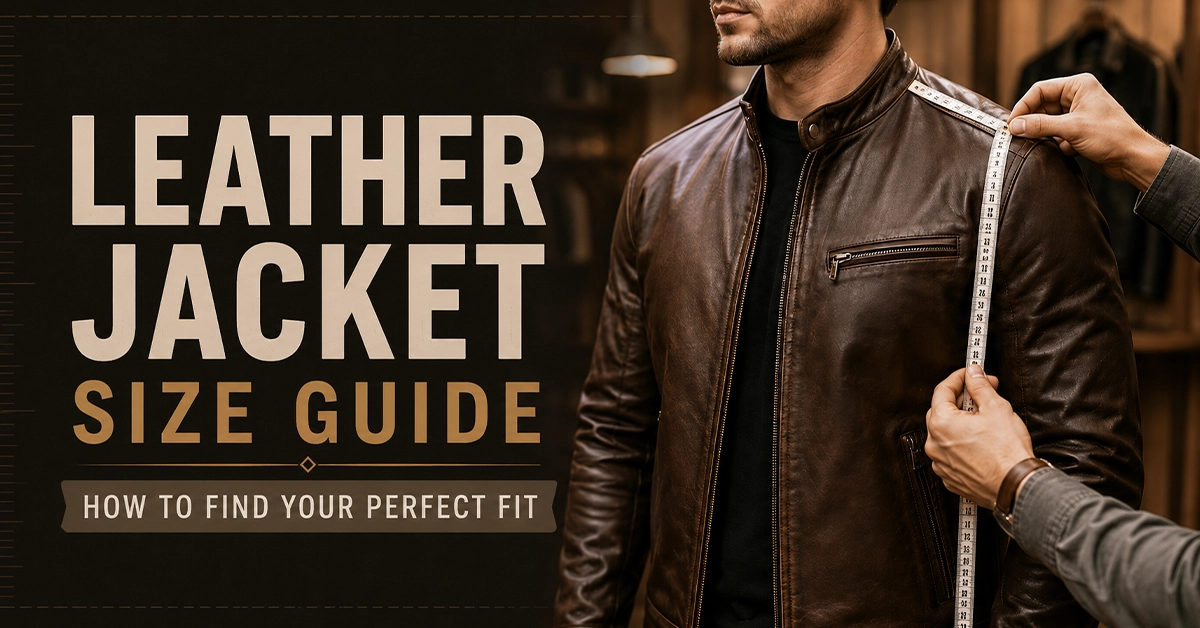
It’s not the guessing that hurts. It’s the confidence of the guess. People who wear a Large in a fast-fashion cotton hoodie walk straight to the Large in a leather jacket and call it done. That is not sizing. That is wishful thinking wearing a tape measure around its neck. Leather drapes differently, behaves differently, and cuts completely differently across the back, sleeve, and chest than any other material you own. The drop, the drape, the armscye – all of it shifts compared to a woven shirt or a softshell jacket.
Clothing & Shoes Are the Most Returned Online Purchases – consumer data shows an overall e-commerce return rate of around 20%, with apparel at the top of that pile largely due to sizing uncertainty. A leather jacket is not a T-shirt you can casually exchange. Get the numbers right the first time.
Quick Reference: Fit Check at a Glance
| The Measurement | How It Should Feel | The Red Flag (Too Small) |
| Shoulders | Seam sits exactly on the shoulder bone; no overhang onto the arm, no climb toward the neck. | Seam droops past the bone or you feel a pinch when rotating your arms. |
| Chest (Zipped) | Snug but not straining; you can slip a flat hand inside with slight resistance. | Zipper bows outward, fabric pulls horizontally, or you cannot breathe deeply. |
| Sleeves | Ends at wrist bone for casual wear; extends slightly past for riding reach. | Sleeve rides above wrist bone when arms hang, or cuts into your armpit when reaching. |
| Bottom Hem / Length | Cropped near the belt line for bikers and bombers; longer coats hit mid-thigh. | Jacket bunches below the hips on a standard cut, or exposes your midriff when arms raise. |
Measuring Like a Master Tailor
The Shoulders: The Anchor
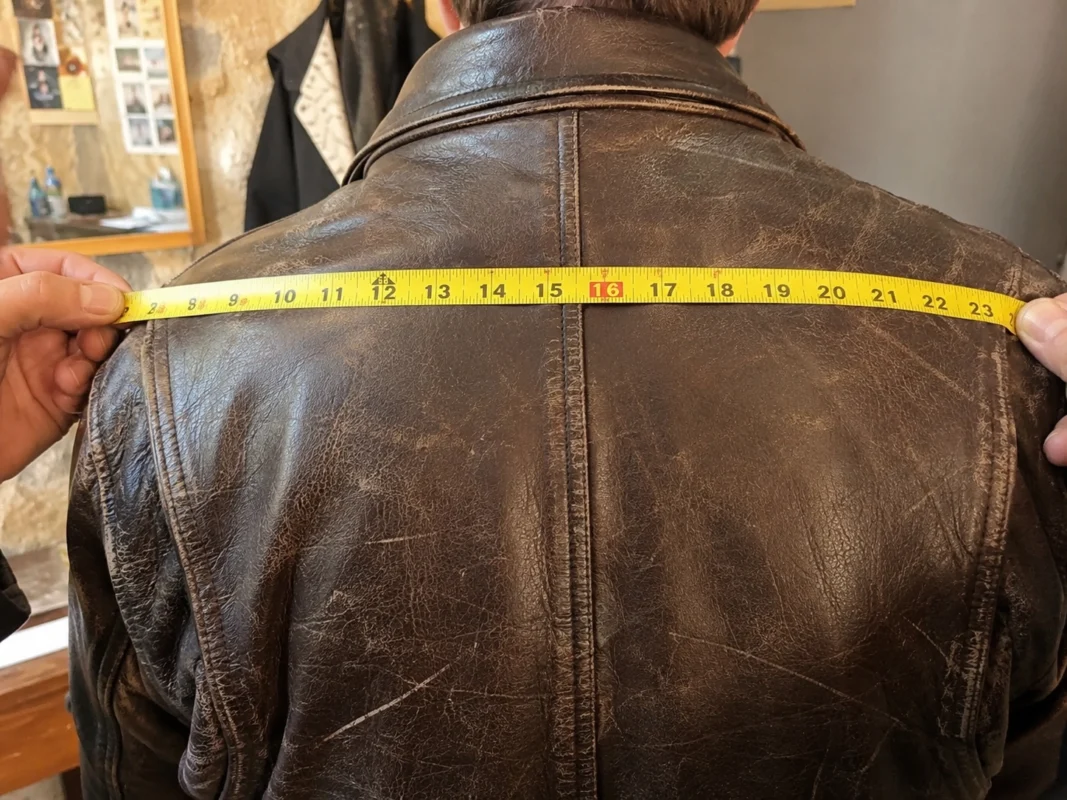
This is the non-negotiable foundation. All other geometry of a leather jacket flows from the shoulder seam. Unlike a knit sweater or a cotton shirt, leather will not just move into place. The shoulder seam must sit exactly on the outer edge of the shoulder bone – not down the arm, not toward the neck. That seam defines the entire silhouette, the fall of the sleeve, the back width.
Shoulders cannot be stretched into position. It is the most difficult area to alter in any leather garment. A tailor can take in side seams. A tailor can shorten a sleeve. But rebuilding a shoulder seam means cutting the jacket apart and largely starting over. It is rarely worth the cost. If the shoulder seam is off, the jacket is the wrong size. End of discussion.
The physical check: stand naturally, look straight ahead, and see where the seam lands. It should rest exactly on the outer edge of the shoulder bone – that bony prominence at the top of your arm. Rotate your arms in a slow circle. If the seam shifts dramatically, or you feel a pinch at the top of the arm, the shoulder line is wrong. Half an inch off here means the entire jacket geometry collapses.
The Chest and the “Two-Finger” Rule
Measure your chest at its widest point, typically across the nipple line. Stand naturally – not with a held breath, not sucked in. Then compare that measurement directly to the brand’s size chart. Don’t rely on your shirt size. Shirt sizes vary between brands and mean nothing for leather.
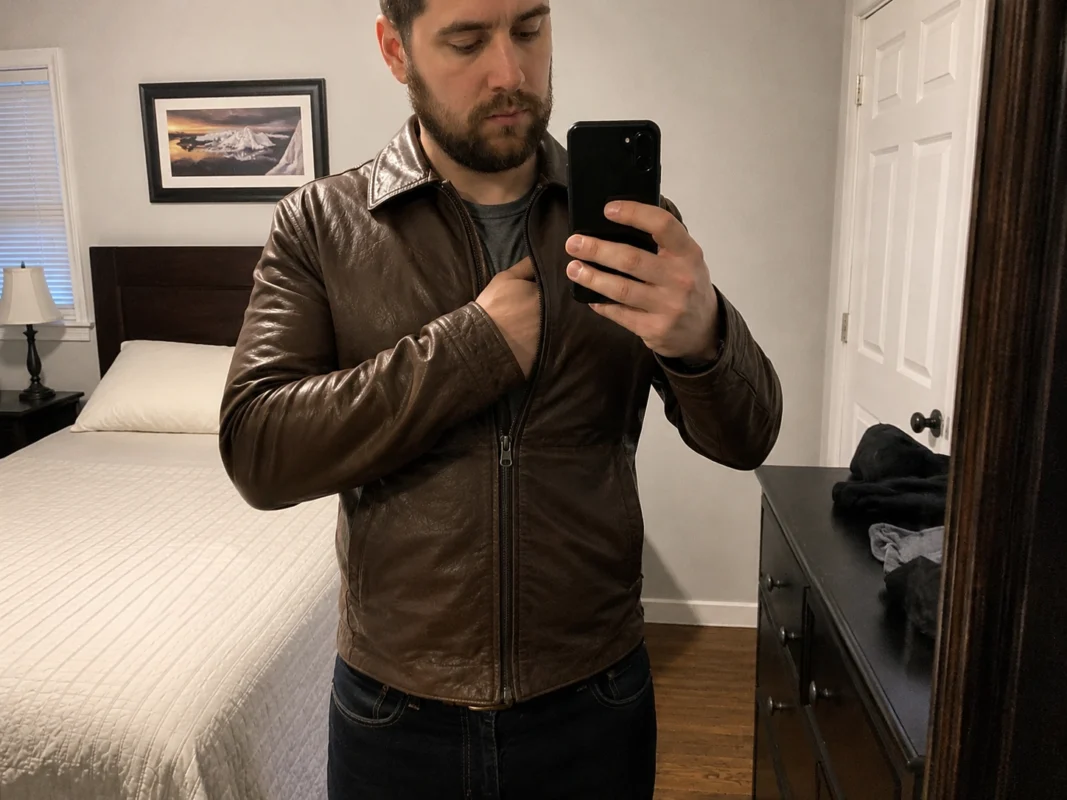
A properly fitted leather jacket, when zipped, should allow you to slip a flat hand inside with light resistance. This is your ease check. Ease is the extra room built into the pattern so you can move – reach forward, sit down, drive a car – rather than just stand upright like a mannequin at a trade show. Without enough ease, you will feel the jacket resist you every time you sit down in a vehicle.
The chest break is your tell. Zip the jacket and look at it straight on. If the zipper lies flat with a slight relaxed softness across the chest panel, the fit is right. If the zipper bows outward under tension, or if you see horizontal stress lines pulling across the chest, you need the next size up. That is not “snug in the right way.” That is plain too small.
Stop ordering a Large just because your cheap cotton hoodies are a Large. Leather does not care about your ego. It cares about your actual chest circumference in inches. Vanity sizing is a retail construct designed to make you feel good about your “size.” It has nothing to do with how a hide-and-hardware garment cuts across your back at shoulder width.
The Sleeves
For casual wear, the sleeve should end at the wrist bone when your arms hang naturally. Clean, precise, intentional.
For motorcycle or riding wear, you need what professionals call the motorcycle reach allowance. Extend your arms forward as if gripping handlebars. In that position, the sleeve should still reach your wrist. If it pulls back and exposes forearm when you reach forward, you have two problems: the armscye is cut too tight for your frame, and the sleeve is too short for riding posture. Back width and sleeve length are linked. One tight cuts into the other.
The feeling to avoid: that sharp pull across the shoulder blade and across the front armhole when you reach forward. New leather has mechanical stretch – it will soften slightly with wear in high-movement zones. But if you cannot reach forward on day one without your jacket rising halfway up your forearm, no amount of break-in will fix that. The armscye is wrong.
The Length
Most classic leather jackets – biker cuts, bombers, moto silhouettes – are intentionally shorter than modern puffers or parkas. The hem should sit around the belt line or just below it, not dragging below the hips. This is not a sizing accident. It is a deliberate design decision rooted in function: when sitting on a motorcycle, a hip-length jacket rides up and bunches. A cropped jacket stays in place.
A properly cropped jacket moves with your body. It does not crease across the lower back, does not bunch at the hips, and does not look like you borrowed it from someone two inches taller. When you have a classic biker silhouette that hangs below your hip bones, check the size – not the style. That extra fabric is almost always a back length cut too long, not a design feature.
Longer cuts – coats, overcoats, extended touring jackets – are a different category with different length rules. Mid-thigh on a leather coat is intentional. On a standard biker? It is usually the wrong size.
Style-Specific Fit Rules
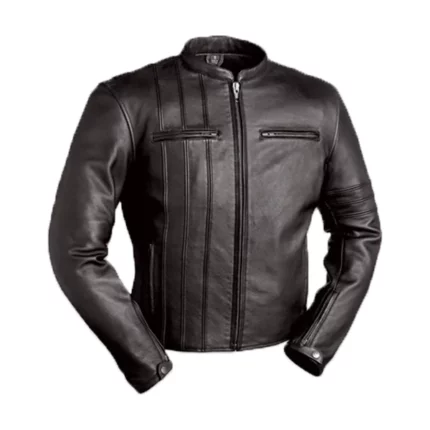
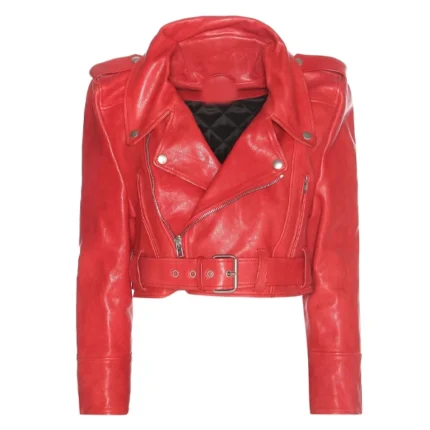
- Biker Jackets (Double Riders): These should fit closer through the chest and upper arm, especially if worn open much of the time. The asymmetrical zip, heavier hardware, and riding posture change how the front hangs – expect a more aggressive, closer silhouette. When browsing the Biker Jackets collection, prioritise snugness in the shoulders and chest first. The cut will relax slightly with wear. Shoulder and chest are your anchors.
- Bomber and Flight Jackets: These are naturally blousier than biker cuts. They rely on ribbed hems and cuffs for shape, not body-contouring seams. Don’t size down to make it look like a biker jacket. The waist is supposed to blouse slightly – that is the silhouette. The elastic does the work at the hem and wrists. When shopping the Aviator Jackets selection, use shoulders and chest as fit anchors. Let the hem gather.
- Men’s Leather Jackets (Classic Cuts): Chest, shoulder, and sleeve proportions vary by era and country of origin. American cuts often run boxier through the torso. European cuts run trimmer. One brand’s Large is another brand’s Medium. Ignore the label entirely. Use your actual tape-measure numbers and compare directly to the size chart when browsing Mens Leather Jackets.
- Women’s Leather Jackets: Fit depends heavily on bust allowance, waist suppression, hip clearance, and whether the silhouette is cropped or relaxed. The right fit should shape the body without torqueing the zipper or straining across the bust line. Browse Womens Leather Jackets with your full measurements in hand – not just your usual dress size. Dress sizes across brands are near-useless for structured outerwear.
Rapid-Fire Sizing FAQs
Will a tight leather jacket stretch out?
Real hide can relax and gain roughly 1–2 inches of give in high-movement zones with regular wear, depending on the leather type and starting tension. Synthetics behave differently and often do not stretch at all. A jacket that is painfully tight in the shoulders or brutally restrictive when zipped is not a smart “break-in” bet; it is just the wrong size.
Should I size up if I want to wear a hoodie underneath?
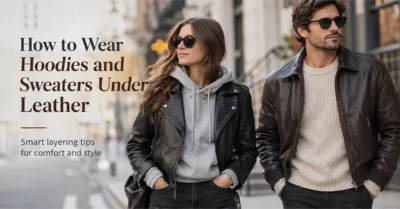
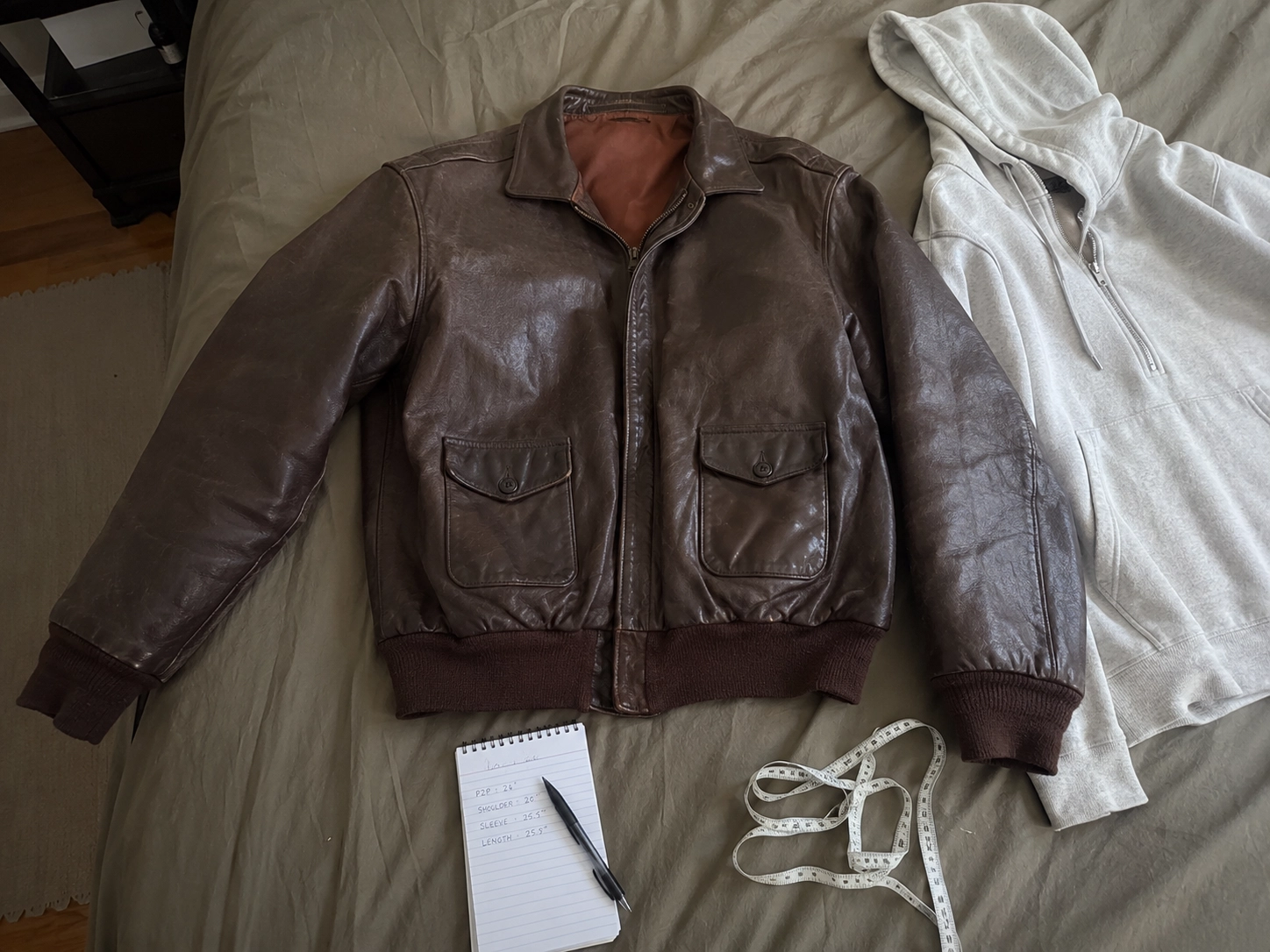
Yes, but intelligently. Measure your chest while wearing the hoodie you plan to layer, or add roughly 2–4 inches to your base chest measurement depending on the hoodie’s weight. Don’t guess; the interior volume of a tee and a midweight hoodie are completely different, and leather does not compress like cotton.
Why does the jacket feel stiff when I lift my arms?
New leather is naturally resistant, and a little restriction during the first few wears is normal. Sharp pulling, choking at the front neck, or severe restriction across the shoulder blades is not break-in. That is an armscye or back width cut too tight for your frame.
How do I know if the shoulders fit correctly?
Stand straight and look at where the seam hits your shoulder. It should rest exactly on the outer edge of the shoulder bone – not slide down your arm or creep toward your neck. Rotate your arms in a slow circle; if the seam shifts dramatically or you feel a pinch, the shoulder line is wrong.
What’s the difference between a fashion fit and a riding fit?
A fashion fit is cut for standing, walking, and general posture, with sleeves ending at the wrist bone. A riding fit accounts for forward reach, longer sleeves, and slightly more back width so the jacket does not ride up on a bike. If you actually ride, you need the extra reach; if you do not, the extra length can look sloppy.
Can a leather jacket be tailored down if it’s too big?
Sometimes, but never perfectly. A skilled leather tailor can take in side seams, shorten sleeves, or adjust a hem. Shoulders, armscye depth, and overall length are extremely difficult and expensive to alter. It is always cheaper and better to buy the right size from the start.
Why do sizes vary so much between brands?
Vanity sizing, different pattern origins, and the absence of any universal leather jacket standard. One brand’s Large is another brand’s Medium. Ignore the label. Use your actual body measurements in inches or centimetres and compare them directly to the brand’s size chart.
Find the Jacket That Fits Your Actual Body
Jacketstown builds jackets to match actual anatomy – not the fantasy sizing that looks good on a tag and fits nobody consistently. Every pattern is graded against real body measurements, and every size chart is built on the expectation that you will use it.
Take your measurements properly. Ignore the label. Ignore what size you usually buy in another category. Find the jacket that matches your build, your layering habits, and the way you actually plan to wear it.
Still deciding on the right silhouette? Our guide to types of leather jackets breaks down every major cut – biker, bomber, moto, and beyond – before you commit to a size.