Blog
Leather Jacket Color Guide: Which Color Suits Your Skin Tone?
- Step One: How to Find Your Undertone
- What These Undertones Actually Mean
- Best Leather Jacket Colors for Warm Undertones
- Best Leather Jacket Colors for Cool Undertones
- Best Leather Jacket Colors for Neutral Undertones
- 2026 Leather Jacket Color Trends You Can Actually Wear
- How to Match Jacket Color with Your Wardrobe and Lifestyle
- Frequently Asked Questions
| Quick Answer: Which leather jacket colour matches your skin tone? Warm undertones: (golden, peachy or olive skin) look best in earthy shades: cognac, rich brown, camel, warm red and olive. Cool undertones: (pink, rosy or bluish skin) shine in black, charcoal, navy, cool gray, burgundy and blue-based reds. Neutral undertones: can lean either direction – mid-tone neutrals like taupe, beige, stone gray and classic black all work well. |
You’re in the cart. There’s a black one, a cognac one, a deep burgundy one, and something that’s almost khaki green that you’re embarrassedly tempted by. You zoom into product photos trying to figure out which one will look alive against your face versus which one will make you look like you forgot to sleep. This is the actual problem with the leather jacket color guide – it’s not about the color of the moment, it’s about what color actually fits you.
Most people go with black because it’s a safe bet. Black will go with anything, black will always be right, black will always be in good taste. All true. However, black isn’t always the most flattering choice for all skin tones, and when you’re spending real money on a leather piece that will last you for years, ‘safe’ shouldn’t be your only strategy. The slightly more interesting jacket – cognac, charcoal, forest green – may do more for your face than the one you’ve purchased three times already.
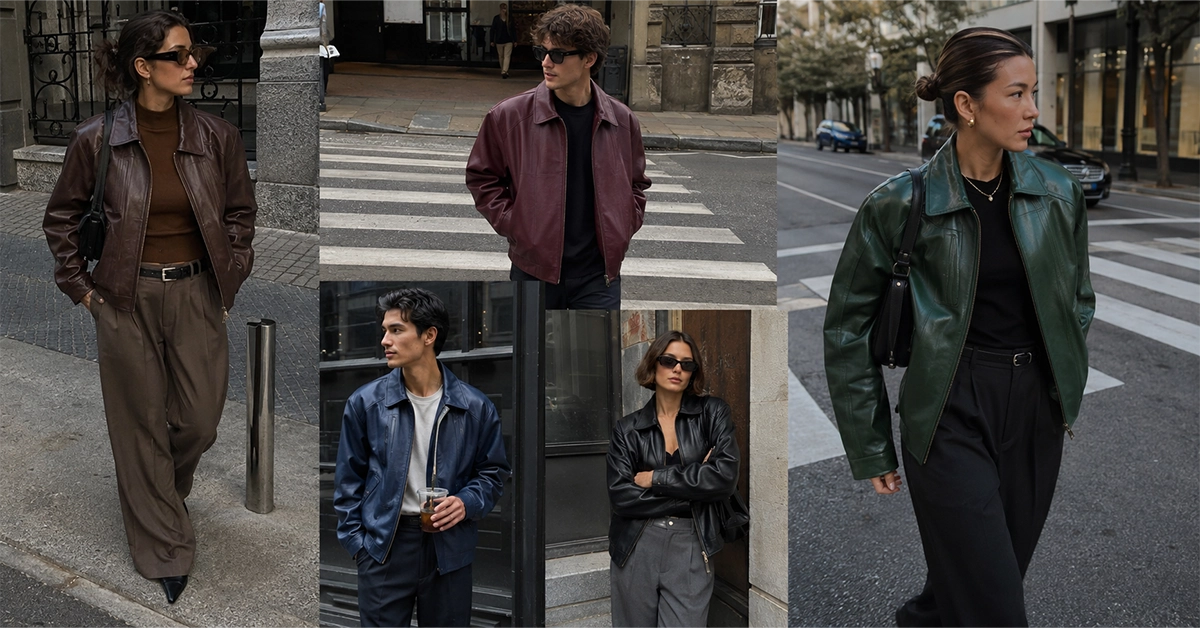
The good news is that leather jacket color options in 2026 have genuinely expanded. Fall/winter 2026 runways ventured beyond classic black, featuring rich color palettes of deep chocolates, cognacs, forest greens, burgundy, and structured navies alongside distressed neutrals. At the same time, 2026 trend reports indicate that earthy shades such as tan, camel, and olive are making a strong comeback in leather outerwear – meaning that the debate over black vs. brown is no longer the whole conversation. Your skin tone can tell you which of these actually belongs in your wardrobe.
Step One: How to Find Your Undertone
Before any jacket color means anything, you need to know whether your skin reads as warm, cool, or neutral underneath. Your surface tone – how light or dark you are – can shift with sun exposure and seasons. Your undertone doesn’t. It’s fixed, and it’s the actual compass for building a leather jacket wardrobe that works.
Three quick tests, none of which require anything complicated:
- Vein test: Look at the veins on your inner wrist in natural light (not fluorescent). Greenish veins point to warm undertones. Bluish or purple veins suggest cool. If it’s honestly hard to tell – could be either – you’re likely neutral.
- White paper or T-shirt test: Hold a plain white sheet of paper or a bright white T-shirt next to your bare face in natural light. If your skin looks yellowish or peachy against it, you’re warm. If it reads pinkish or rosy, you’re cool. If nothing particularly stands out, neutral.
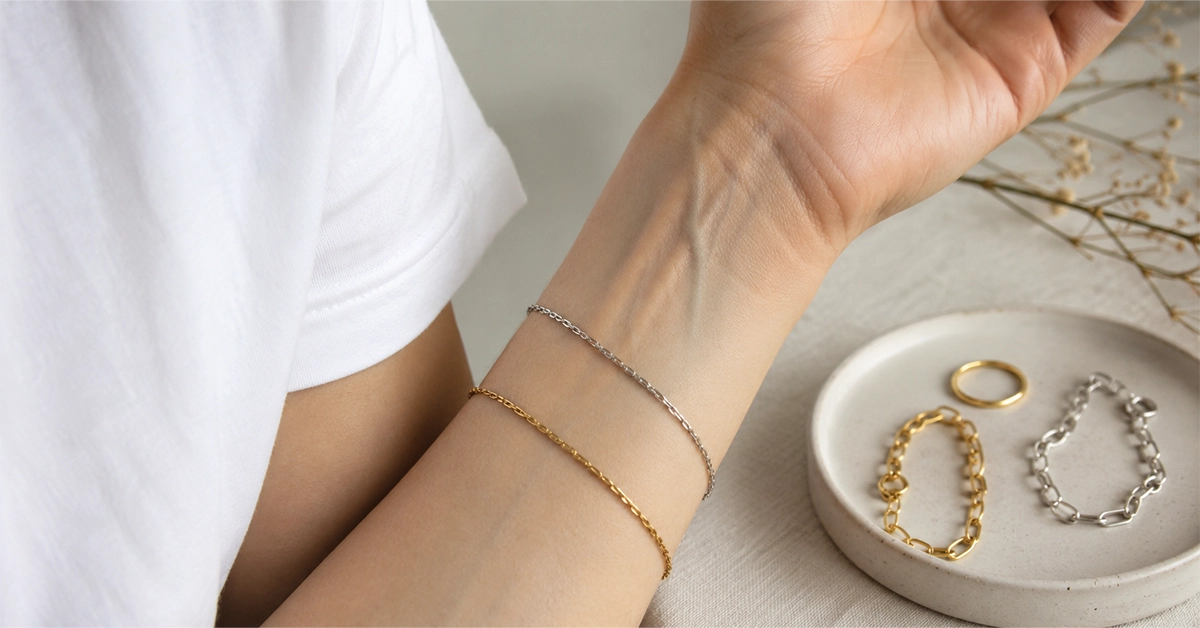
- Gold vs. silver jewellery: Yellow gold tends to look more natural and flattering on warm undertones. Silver and white gold sit better against cool undertones. If both look equally good – or equally meh – add that to the neutral column.
What These Undertones Actually Mean
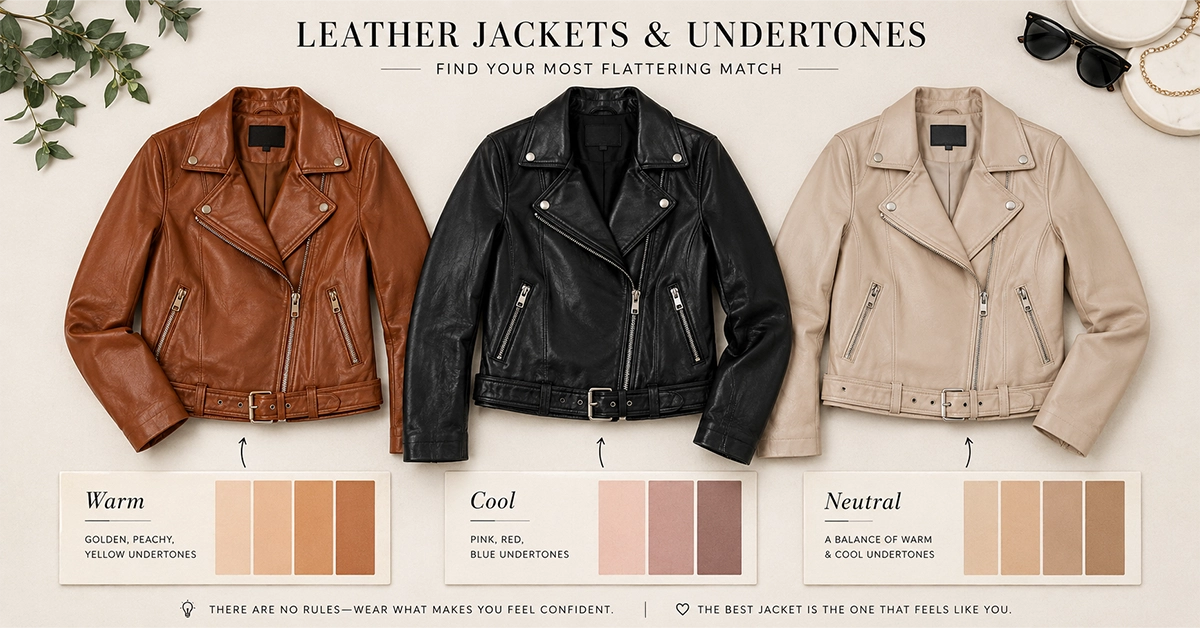
Warm undertones are golden, peachy or olive. Consider skin that looks sun-kissed even in winter, or has a natural honey or bronze quality. It’s the skin that tends to tan rather than burn.
Cool undertones are pink, rosy or faintly bluish. This includes fair skin that flushes easily, medium skin with a clear pink cast, or deeper skin with a distinctly blue-toned depth.
Neutral undertones are truly balanced – neither warm nor cool dominates. This is also the category people fall into when they’ve done all three tests and gotten contradictory results. Neutral isn’t a consolation prize; it’s the most flexible undertone category there is.
For a detailed undertone reference, Cosmetology & Spa Academy’s 2026 skin tone guide explains the distinction clearly: your surface tone is like paint on a wall, and your undertone is the primer underneath – it changes how everything sitting on top of it looks.
Best Leather Jacket Colors for Warm Undertones
Here’s the basic principle: warm skin tones look most harmonious in colors that share the same warmth. When the jacket’s undertone matches yours, it looks like you were dressed by someone who thought about it. When it fights yours, you look vaguely tired regardless of how nice the jacket is.
Earth Tones and Browns
This is your territory. Rich chocolate brown, caramel, cognac and camel leather jackets all have a golden or amber base that echoes warm undertones rather than fighting them. The effect on medium warm skin especially is almost cinematic – a deep chocolate brown softens facial lines and makes the complexion look sunkissed rather than sallow. A cognac leather jacket on warm golden skin does something no black jacket quite replicates: the whole look feels cohesive, like the jacket and the person came from the same palette. Tan and beige leather jackets are dangerously underrated here. When the undertone match is right, a camel leather blazer reads more expensive than black. This is where most people get it wrong – they assume black is the elevated choice and beige is safe and boring, when the reality is exactly the opposite.
Warm Reds
Brick, rust, tomato and terracotta reds all have an orange or yellow base. On warm undertones, these shades look rich and intentional rather than costume-y. A brick-red biker jacket on warm skin glows. The thing to avoid is a blue-based red – cherry, wine, or anything described as “cool berry” – because it pulls against the warmth rather than working with it. If you’re browsing red leather jackets and the shade looks more like “fire engine” than “burnt clay,” it’s probably blue-based and will sit slightly off on warm skin.
Olive and Warm Green
The base color of olive is yellow-green – essentially a warm color wearing a green costume. It looks great on warm and olive complexions. Deep warm green or army green leather also sits well here. What warm undertones generally want to avoid is the cool-green end of the spectrum – forest green or emerald, which carry more blue. Those shades tend to flatten warm complexions. Look for green leather jackets labeled olive, army, or khaki rather than forest or hunter.
What About Black for Warm Undertones?
It works – just not as powerfully as it does on cool undertones. Classic black leather jackets are a practical choice for anyone who needs maximum wardrobe versatility, but if your undertone is warm the jacket will look more neutral-functional than genuinely flattering. The fix: wear it with warmer tones close to your face – a camel knit, a cream tee, a tan scarf – so the outfit as a whole doesn’t pull cool.
As Lifehack’s leather jacket color guide notes, cognac and tan jackets create a cohesive look with warm complexions because they share the same underlying undertone – it’s why the combination looks effortless rather than assembled.
Best Leather Jacket Colors for Cool Undertones
Cool undertones are where black leather jackets truly earn their reputation. It’s not that black flatters everyone equally – it’s that cool undertones and black have a genuine chemical reaction. The jacket looks sharp. The face looks clear. The whole thing looks intentional.
Black and Charcoal
True black on cool undertones is as close to a universal formula as leather jackets get. The contrast between the jacket and the pinkish or rosy quality of cool skin creates clarity instead of harshness. The caveat: on very fair cool skin, a full black leather jacket in an otherwise monochrome outfit can look flat or overwhelming. The solution isn’t to swap the jacket – it’s to add something light near the face (a crisp white shirt, a soft scarf) to create contrast without softening the jacket’s edge. Charcoal and cool gray leather jackets offer the same cool-spectrum harmony at a lower contrast level – useful if full black reads too stark on your particular complexion. Charcoal on cool undertones makes pink tones look fresh rather than flushed.
Navy and Deep Blue
Navy has a built-in blue base that harmonises naturally with cool undertones – it’s a genuine alternative to black, not a compromise. Navy and blue leather jackets sit especially well against very fair cool skin where black might read harsh, and they’re a strong choice for medium cool-toned complexions that want something other than black without going warm. What you’re looking for: a pure navy or deep blue with no green component. Blue-greens and teals start to pull warm, which dulls the effect on cool undertones.
Cool Reds: Cherry, Wine, Burgundy
Now let’s get specific with red selection. Blue-based reds – cherry, wine, cool burgundy, true red with a slightly blue cast – work with cool undertones. They look rich and intentional. Orange-based reds (brick, rust, tomato) can look muddy or clashing on very cool skin, creating an odd warmth that competes rather than complements. When shopping red leather: if the description says burgundy, wine, or raspberry, it’s probably blue-based and safe for you. If it says brick, rust, or terracotta, it’s warm-based and will fight your undertone.
Forest Green and Emerald, Not Olive
Cool undertones and green leather follow the same logic. Forest green and emerald have a blue component that resonates with cool skin. Olive, khaki, and army green carry yellow – they tend to make cool complexions look a bit yellowed or flat. If you love the idea of a green leather jacket, go deep and blue-tinged rather than earthy and yellow-tinged.
Best Leather Jacket Colors for Neutral Undertones
Neutral undertones are the chameleons of color analysis. Nothing reads drastically off. The real skill is using that flexibility intentionally instead of defaulting to safe-but-forgettable choices.
The sweet spot for neutral undertones is the middle of any color’s spectrum – not the most saturated, not the most muted, not the warmest, not the coldest. That’s how taupe, stone, greige, medium brown, and soft navy come across as particularly settled and wearable.
What Tends to Work
- Classic black – as versatile here as anywhere, and the go-to when the wardrobe or occasion calls for maximum flexibility.
- Medium and dark browns – not as yellow-charged as a warm camel, not as cold as an espresso. Chocolate to chestnut is the sweet range.
- Taupe, stone, greige and neutral beige – these mid-tone neutrals reflect the balanced quality of neutral undertones. They look expensive and considered rather than washed-out.
- Soft navy, muted olive, and medium gray – all colors that sit in the middle of their warm/cool spectrum rather than at either extreme.
The practical application: neutral undertones can use mood to guide color choice. Going for something editorial and sharp? Lean toward black, charcoal, or cool-base colors. Wanting to look warm and approachable? Reach for medium brown or a camel-adjacent beige. Neutral undertones can have almost any color – the skill is choosing deliberately rather than just grabbing whatever.
As the 2026 neutral skin tone color guide from color-analysis.app summarises: dress to the undertone, not the surface tone. For neutral undertones, greige, warm ivory, soft camel, and muted sage are particularly reliable foundations for a leather jacket wardrobe.
2026 Leather Jacket Color Trends You Can Actually Wear
The FW 2025–2026 runway cycle expanded what leather is allowed to look like. Brands moved beyond classic black, using distressed treatments to create shades of grey, charcoal and deep green alongside rich earth-toned color stories. Fashion coverage going into 2026 notes that colored leather jackets are gaining serious ground – olive, forest green, navy, and burgundy are now considered refined alternatives to black rather than novelty choices.
Here’s how those trend colors map to actual undertones:
| Trend Color | Best Undertone | Why It Works | Caution |
| Rich chocolate / cognac | Warm, Neutral | Golden base echoes warm skin; cohesive on medium warm tones | Can look heavy on very fair cool skin |
| Burgundy / wine | Cool, Neutral | Blue-red base clears pink undertones; rich without overpowering | Orange-based burgundy variants lean warm – check the shade |
| Forest / deep green | Cool, Neutral | Blue-green component harmonises with cool complexions | Olive shades in this category may suit warm undertones better |
| Navy | Cool, Neutral | Strong blue base pairs naturally with rosy or pink undertones | Warm undertones may find navy dulling – try teal-blue instead |
| Charcoal / stone gray | Cool, Neutral | Softer than black; lifts cool skin without harsh contrast | Warm undertones: pair with warm accessories to prevent flatness |
| Camel / warm beige | Warm, Neutral | Golden-tan base mirrors warm complexions beautifully | Cool undertones: try a cooler sandy beige with a white shirt nearby |
One honest note on bold trend colors: red and green get a lot of runway time, but in everyday wear they work best when the shade is chosen carefully by undertone. A bright blue-based red on warm skin doesn’t look wrong the way a bad foundation does – it just never quite settles. You wear it slightly self-consciously. The right red on the right undertone (see the full red leather jacket range) looks like it was designed for you specifically.
How to Match Jacket Color with Your Wardrobe and Lifestyle
Undertone compatibility is important. So is the question of what else is in your closet.
Black: The correct choice when you need maximum versatility, when your wardrobe is mostly monochrome or dark, or when the jacket is going out more than it’s going casual. Even if black isn’t your absolute most flattering option, the right outfit underneath can bridge the gap. A warm tee and gold jewellery can soften black on warm undertones enough to make it work.
Brown and cognac: The better choice for everyday, casual-leaning wardrobes built on earth tones, denim, cream and olive. A cognac jacket against a white tee and dark jeans looks genuinely considered. If your wardrobe has a lot of neutrals and naturals, brown is probably the smarter investment than black.
Blue: A natural fit for denim-heavy wardrobes. Navy and blue leather jackets layer seamlessly over jeans without competing for attention. They also work beautifully with cream, grey and white.
Green: A statement that’s more wearable than it looks on a product page. Olive and forest green leather jackets sit beautifully against neutrals – cream knits, tan trousers, black jeans. A plain outfit has a way of becoming an actual look with the right green jacket.
Red: A personality piece. Choose muted, dark reds – brick, wine, burgundy – for more day-to-day flexibility; they read as a statement without screaming. Bright or saturated reds are occasional-wear territory.
Gray: Sharper than beige, softer than black. Charcoal and cool gray leather jackets work well in minimal and monochromatic wardrobes and are particularly good for office-casual environments where black might look too severe.
Beige: The sleeper pick. Beige leather looks inexpensive when the undertone match is wrong and genuinely expensive when it’s right. Get this one right and it becomes the jacket you reach for every single week.
Once you know your undertone and your wardrobe base colors, it’s much easier to scroll a category page and spot your shade in seconds.
Frequently Asked Questions
Is black a good leather jacket color for every skin tone?
Black works on every skin tone, but it flatters most naturally on cool undertones, where it creates sharp, clear contrast. On warm undertones it’s more of a workhorse than a flatterer – pair it with warm colors near the face to avoid a cold or harsh appearance. Full black on very fair cool skin with no contrast in the outfit can look flat; add a crisp white shirt or a light scarf to bring the contrast back.
Which leather jacket color is safest if I’m buying my first one?
It depends on your undertone and lifestyle. Warm undertones: start with a medium brown or cognac – it’s more flattering than black and more interesting than beige. Cool undertones: black is genuinely your safest first pick because it works everywhere and actually flatters you. Neutral undertones: classic black, or a taupe or medium gray if you want something that reads a little softer and more editorial.
Can I wear a red leather jacket with my undertone?
Yes, but the specific shade matters more than the color itself. Warm undertones should look for brick, rust, tomato or burnt orange reds – yellow-based shades with no blue in them. Cool undertones need blue-based reds: cherry, wine, burgundy, or anything described as ‘cool red.’ The wrong red on the wrong undertone doesn’t look catastrophically bad – it just looks slightly off in a way that’s hard to place.
What leather jacket color looks best on warm undertones?
Cognac and rich chocolate brown are the two most forgiving and flattering choices for warm undertones. Both share the golden-amber base that echoes warm skin rather than fighting it. Camel and warm beige are close seconds – when the match is right, they look more elevated than black.
What leather jacket color looks best on cool undertones?
Black is the hero shade for cool undertones, and the reason is simple: cool undertones and true black have a natural harmony that makes the combination look intentional. Charcoal is a close second if black feels too stark for everyday wear. Navy is an excellent alternative that’s technically a little more interesting than black while sitting in the same cool-toned lane.
What if I can’t tell whether my undertone is warm or cool?
You’re probably neutral, or close to it – especially if you got conflicting results from different undertone tests. The good news is that mid-tone neutrals are your most reliable starting point: taupe, stone gray, medium brown and muted olive all sit at the balanced center of their color spectrums and look cohesive without requiring a committed warm or cool match. Classic black also works well for neutral undertones and gives you maximum wardrobe flexibility while you figure it out.
Are 2026 leather jacket color trends actually wearable for everyday outfits?
Yes – and more so than past trend cycles. The 2026 direction for leather is toward richer, more considered neutrals and earthier alternatives to black rather than novelty colors. Chocolate brown, cognac, forest green, navy, charcoal and warm beige are all genuinely everyday colors when chosen in the right shade for your undertone. The trend picture confirms it: people are choosing leather jacket shades that suit their personal complexion and will be worn season after season, not colors that look exciting in a product photo and stay in the closet. See the undertone sections above to find which of this season’s colors will actually land on your skin.