Blog
How to Wear Hoodies and Sweaters Under Leather
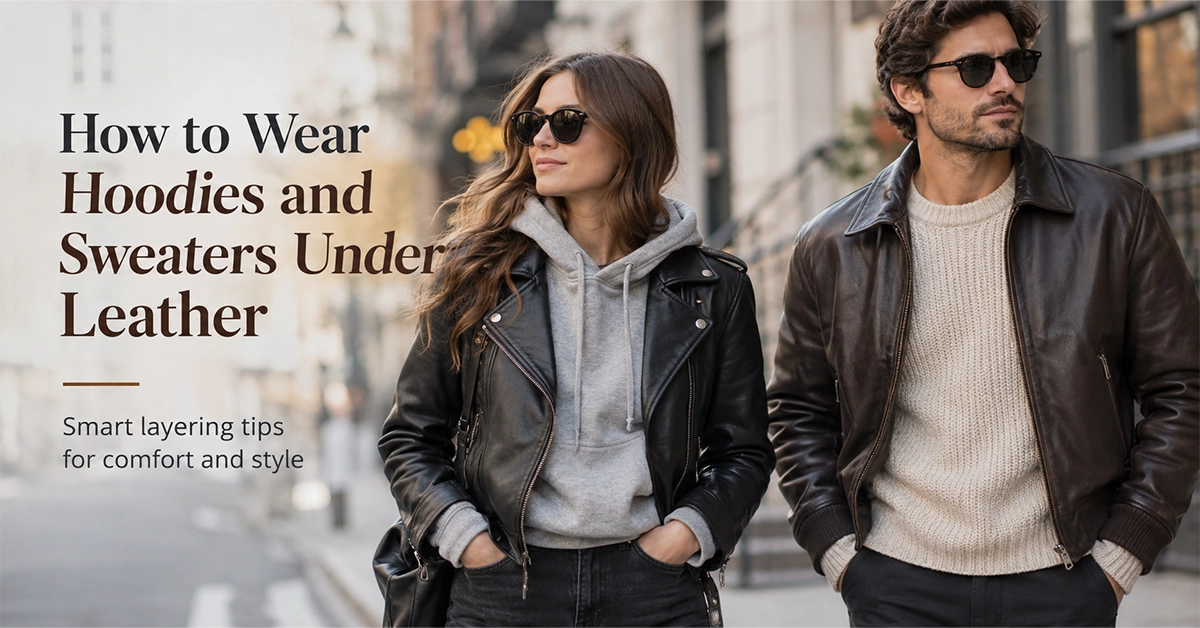
How do you wear a hoodie or sweater under a leather jacket without looking bulky?
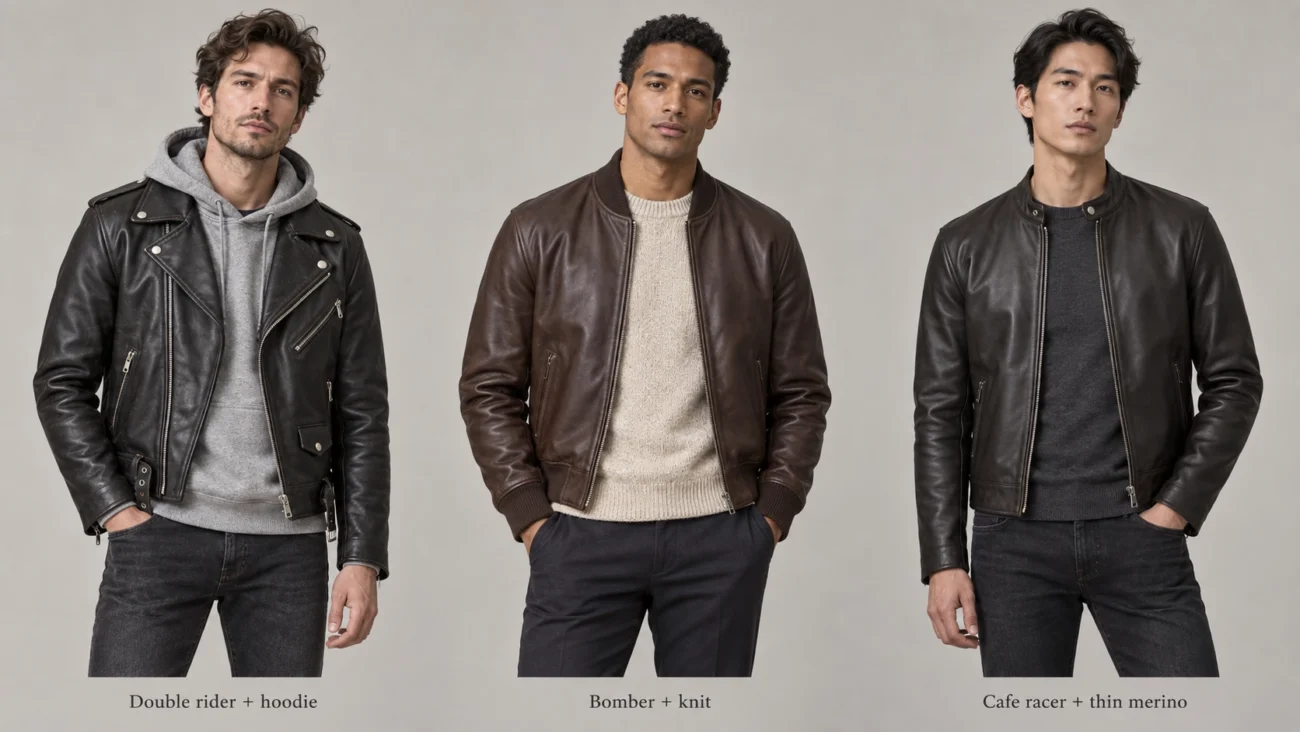
Match the jacket’s silhouette to the fabric weight (GSM) of the mid-layer. If you plan to wear mostly heavy knits or fleece, size up one full size and check that the shoulder seam still sits on the shoulder bone. Double rider bikers and relaxed bombers handle hoodies well; a tailored cafe racer should only go over thin merino wool or cashmere.
Layering under leather isn’t just two garments stacked on top of each other. It’s a structural problem. Leather is a rigid barrier that gives no ground to bulk, and a hoodie that feels fine on its own can turn a fitted jacket into a straitjacket the moment you zip up.
The timing makes this worth solving now. NOAA’s Climate Prediction Center is favoring above-normal temperatures across much of the country this December through February, which means plenty of people will be wearing leather in mild, damp winter weather, where a thin layer beats a heavy one. I’ve fitted a lot of clients, and the ones who struggle aren’t the ones facing deep cold. They’re the ones who guess wrong about weight in the 40s and 50s.
This guide covers the physics of why bulk shows, how to size up without wrecking the jacket, which silhouettes tolerate which fabrics, and the exact hem and cuff proportions that make a layered look read as deliberate. Start with the quick reference.
| Mid-Layer | Approx. Weight (GSM) | Jackets That Work | Sizing Advice |
|---|---|---|---|
| Fine merino or cashmere knit | About 150–250 | Cafe racer, bomber, double rider | True size |
| French terry hoodie | About 250–350 | Double rider, bomber | True size, or size up if between sizes |
| Fleece-lined heavyweight hoodie | About 350–450+ | Relaxed double rider, flight bomber | Size up one |
| Chunky cable knit | About 400–600 | Bomber, relaxed double rider | Size up one; avoid slim cuts |
The Physics of Layering: Why You Look Bulky
The Michelin Man Effect
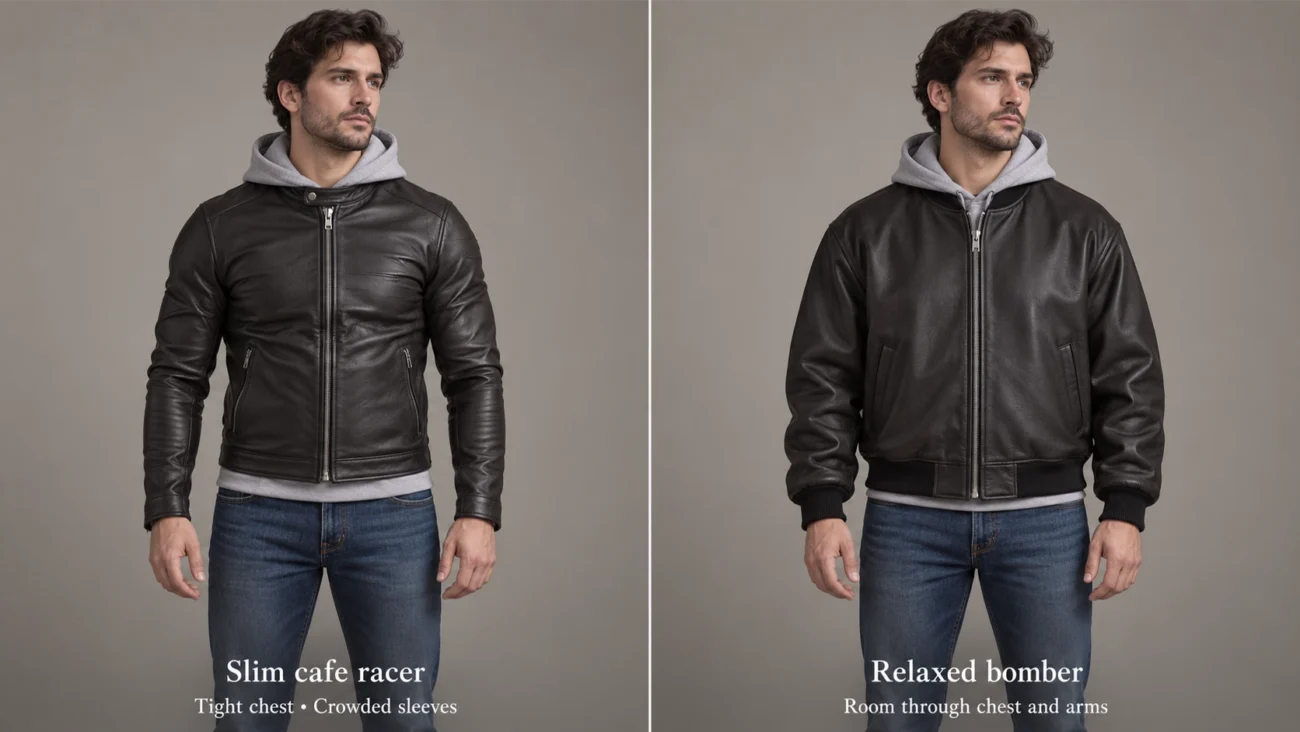
Fabric compresses. Leather doesn’t. Slide a heavyweight 400-GSM fleece hoodie under a snug jacket and the fleece has nowhere to go. It pushes outward at the chest, the upper arm, and the lower back while the leather holds its shape like a shell. You end up with a rounded, inflated torso and sleeves that jut out from the body instead of hanging from the shoulder. That’s the Michelin Man effect, and it comes down to ease: the gap between your body and the jacket’s interior.
Where the Jacket Gives Out First
Look at the tension on the back panel. When the mid-layer is too thick, the back of the jacket pulls horizontally across the shoulder blades, and creases fan out from the armhole. Next, the zipper starts to warp, its teeth bowing under strain. Reach forward and the hem rides up. If you can’t lift your arms to shoulder height without the whole jacket following, the layer is too heavy for the cut. The fibers just give up.
Which Silhouettes Are Built for Thicker Layers
Flight jackets were originally cut to sit over heavy flying gear, so leather bomber jackets are far easier to layer over thick hoodies than the slim moto cuts that dominate fashion racks. Fuller armholes, a relaxed body, and a ribbed hem all give the mid-layer room. A tailored cafe racer is the opposite: a close, short, minimal cut designed to sit on the body.
The Armscye and the Reach Test
The armscye is the armhole curve, and its depth controls how freely your arm moves once the jacket is zipped. A shallow armscye lifts the whole jacket every time you raise your arm, which is why slim cuts feel restrictive with extra fabric underneath. A deeper, higher-cut armhole with a roomier sleeve cap gives the arm space to travel. So run a simple reach test in the fitting room, wearing the actual mid-layer. Raise both arms forward to shoulder height, then cross them over your chest. If the hem climbs past your belt line or the back pulls tight, the layer and the jacket are incompatible.
The Sizing Dilemma: To Size Up or Not to Size Up?
How Sizing Up Ruins the T-Shirt Look
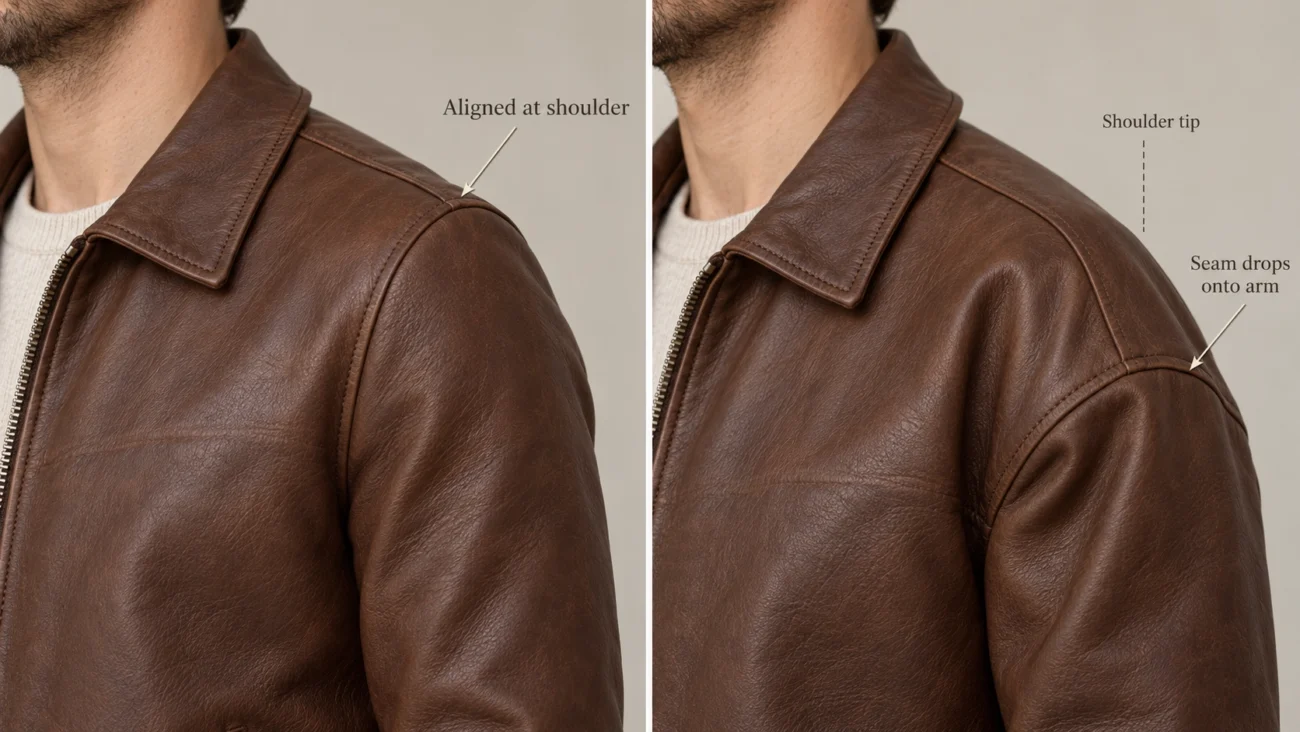
Sizing up fixes the hoodie and breaks everything else. A jacket one full size larger gains roughly two inches of chest circumference and noticeably longer sleeves. Wear it over a plain tee and that extra room reads as a borrowed jacket: the shoulder seam droops, the sleeves pool at the wrist, and the hem hangs lower than the proportions intended. If your jacket will see tees as often as hoodies, sizing up costs more than it gains.
The Shoulder Seam Rule
The seam where the sleeve meets the body should sit at the edge of your shoulder bone. A tailor can’t fix that one cheaply. When you size up, test it with your thickest intended layer on. If the seam lands within roughly half an inch of the bone, the size works. If it slides down onto the upper arm, you’ve gone too far, and no amount of layering logic will rescue the fit. The full leather jacket size guide covers how to take these measurements at home before you order.
What Else Moves When You Size Up
Chest isn’t the only dimension that changes. Sleeves typically gain about half an inch, and body length grows with them, so a jacket that once ended at the hip bone may land lower on the thigh. For average proportions, that’s manageable. If you’re shorter, it can ruin the hem-to-waist ratio the whole look depends on. Before you commit to a larger size, check the garment’s listed sleeve length and back length against a jacket you already own.
Break-In Buys You Some Room
A new leather jacket is tighter than it will be in two months. Body heat and movement loosen the hide, so a jacket that feels borderline over a hoodie on day one may be comfortable by week six. That isn’t permission to buy two sizes too small. It’s a reason not to oversize out of panic, and the notes on softening a stiff leather jacket explain what to expect from the process.
Silhouette Match: Which Jackets Work (and Which Do Not)
Silhouette decides ninety percent of the outcome before fabric even enters the conversation. The main types of leather jackets each carry a different amount of built-in ease, and layering success follows from that.
The Double Rider: The Streetwear King
Asymmetrical zip, broad lapels, a fuller cut through the chest and sleeves. Look at the drop of the armhole on a good double rider and you’ll see why it handles a hoodie: there’s room to move. The structure frames the hoodie neatly, with the hood laid over the back of the collar for the classic streetwear read. If you’re shopping for one to wear this winter, the biker jacket range is where this cut lives.
The Bomber and Aviator: The Natural Fit
Ribbed cuffs and a ribbed waistband hold the layer in place, and the generous body avoids pressure points. The knit hem also solves the hem-ride problem. It cinches at the hip, so the jacket stays put as you move. Flight heritage is built into the cut, which is why aviator-style jackets are the easiest recommendation for anyone who wants thick layers without overthinking it.
The Cafe Racer: The Danger Zone
A cafe racer is a minimalist, slim jacket with a snug collar, close sleeves, and a short hem. Here is where the proportions break. Add a hoodie and the hood has nowhere to go, because the band collar can’t sit over it. The sleeves can’t take the cuff bulk, and the jacket rides up. Fine merino or cashmere over a thin tee is the ceiling. Treat everything heavier as a mistake.
A Note on Fitted and Women’s Cuts
Women’s biker and moto cuts tend to be shorter, with narrower sleeves and a closer waist, so the same GSM rules apply with less tolerance. A French terry hoodie that fits easily under a men’s double rider may be too much under a fitted women’s version. Don’t give up on layering. Shift one step lighter instead: fine knit in place of French terry, French terry in place of fleece, and a crewneck rather than a hood where the collar is close.
Fabric Friction and Weights (GSM)
Understanding GSM
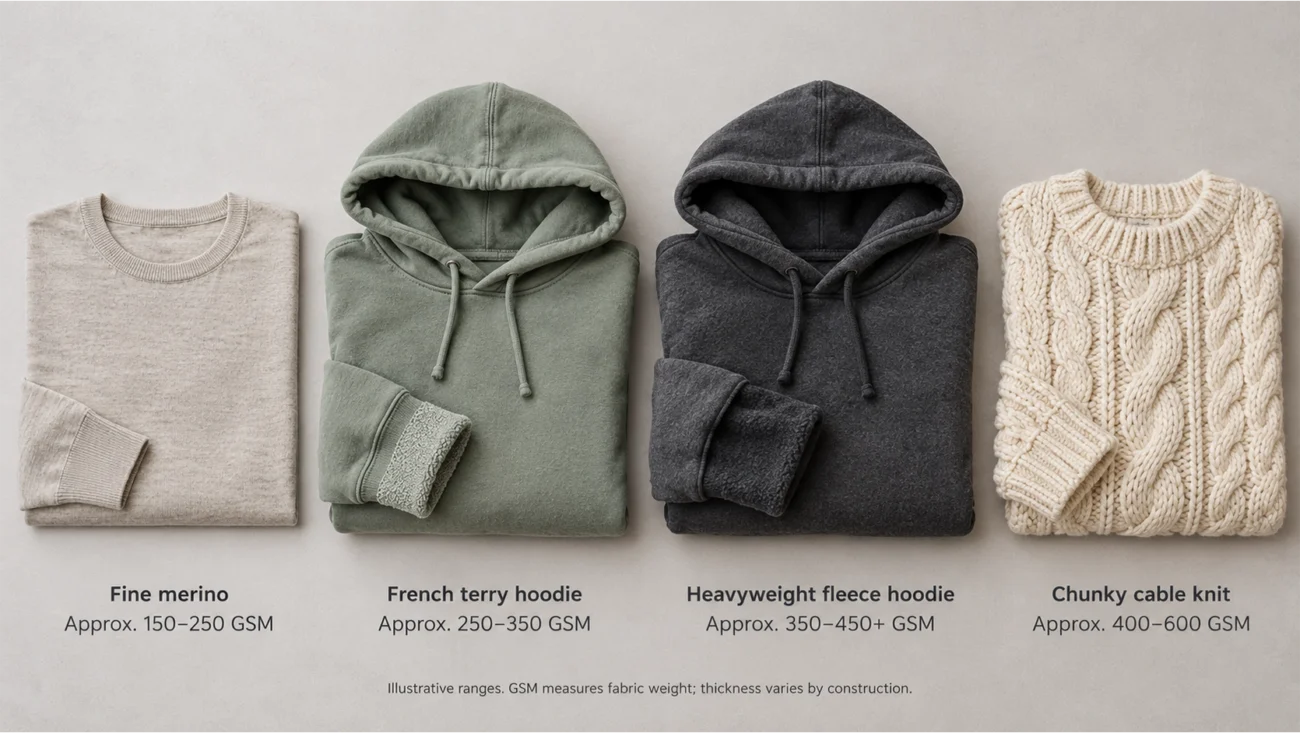
GSM stands for grams per square meter, a measure of how much fabric mass sits in a given area. Grammage is the technical term, and it predicts bulk more reliably than the words “lightweight” or “heavyweight” on a label. A plain tee runs roughly 150 to 180 GSM. A midweight hoodie sits around 280 to 350. A fleece-lined heavyweight can exceed 400. Know the number and you can predict how a mid-layer will behave under a rigid shell.
Heavyweight Fleece vs. French Terry
Fleece traps air with a brushed interior, which makes it cozy and bulky. French terry has loops on the inside and a smoother face, so it’s thinner, drapes better, and slides more easily against a lining. For leather layering, French terry is the smarter default. Keep heavyweight fleece for relaxed, roomy jackets only. Here is the reality: heavy fleece grabs the lining and creeps up your torso as you move.
Chunky Knits vs. Fine Merino and Cashmere
A chunky cable knit adds three-dimensional texture, and every cable becomes a pressure point under the jacket’s inner panel. Fine merino wool and cashmere do the opposite. They add warmth without profile, and they glide against satin linings, so there’s no drag at the shoulder or sleeve. If a jacket runs slim, thin knits aren’t a compromise. They’re the right tool.
Matching Weight to the Actual Weather
Warmth doesn’t have to come from the mid-layer alone. With NOAA forecasting a very strong El Niño through this fall and winter, many regions are likely to see milder, wetter stretches than usual, and that favors lighter, smarter layers. When you break it down, a fine knit plus a lined jacket often outperforms a heavy hoodie. The hoodie’s bulk traps air only where it isn’t compressed, and compression is exactly what a tight jacket creates. On genuinely cold days, add warmth with a thermal base layer rather than a thicker top, which keeps the visible profile slim.
How the Jacket Lining Changes Everything
Look at the interior before you decide. Silk, satin, and viscose linings are slippery, so a mid-layer slides cleanly past the sleeve and body. Cotton linings grip, pulling fabric against your arm and bunching it at the elbow. Quilted linings add their own padding and eat into the ease you may have needed for the layer. Pair heavy fleece with an unlined or cotton-lined jacket and you’ll get bunching, dragging, and eventually wear on the inside of the sleeve. Smooth beats grabby every time.
The Golden Ratio: Hemlines and Proportions
A layered outfit succeeds or fails on three or four inches of fabric. Here are the targets.
| Measurement | Target | What Goes Wrong |
|---|---|---|
| Hoodie hem below jacket hem | Hidden, or 1 inch maximum | Past 2 inches reads as a mismatched dress length |
| Hoodie cuff past jacket cuff | Half an inch to 1 inch | Nothing visible looks stuffed; too much looks sloppy |
| Layer thickness vs. jacket chest ease | Mid-layer under about one inch of added girth | Zipper strain, lifting hem, restricted reach |
How Far Should the Hoodie Stick Out Below the Jacket?
Either hide it or commit to a small, even reveal. A hoodie hem peeking one inch below a hip-length jacket looks intentional. Two inches and it looks like you borrowed the hoodie from someone taller. Check the proportion in a mirror from the side, not just the front. If the hoodie is too long, fold the hem up once or choose a cropped cut. The goal is a single clean horizontal line at the hip.
Managing the Sleeve Cuffs
Let the hoodie cuff peek out half an inch to a full inch past the jacket cuff. It signals layering without bulk. If the cuff is thick and ribbed, push it up the forearm slightly so it doesn’t stack against the jacket cuff and fight for space. If nothing is visible, either the sleeves are too short or the mid-layer is too thin to matter. Both are fixable.
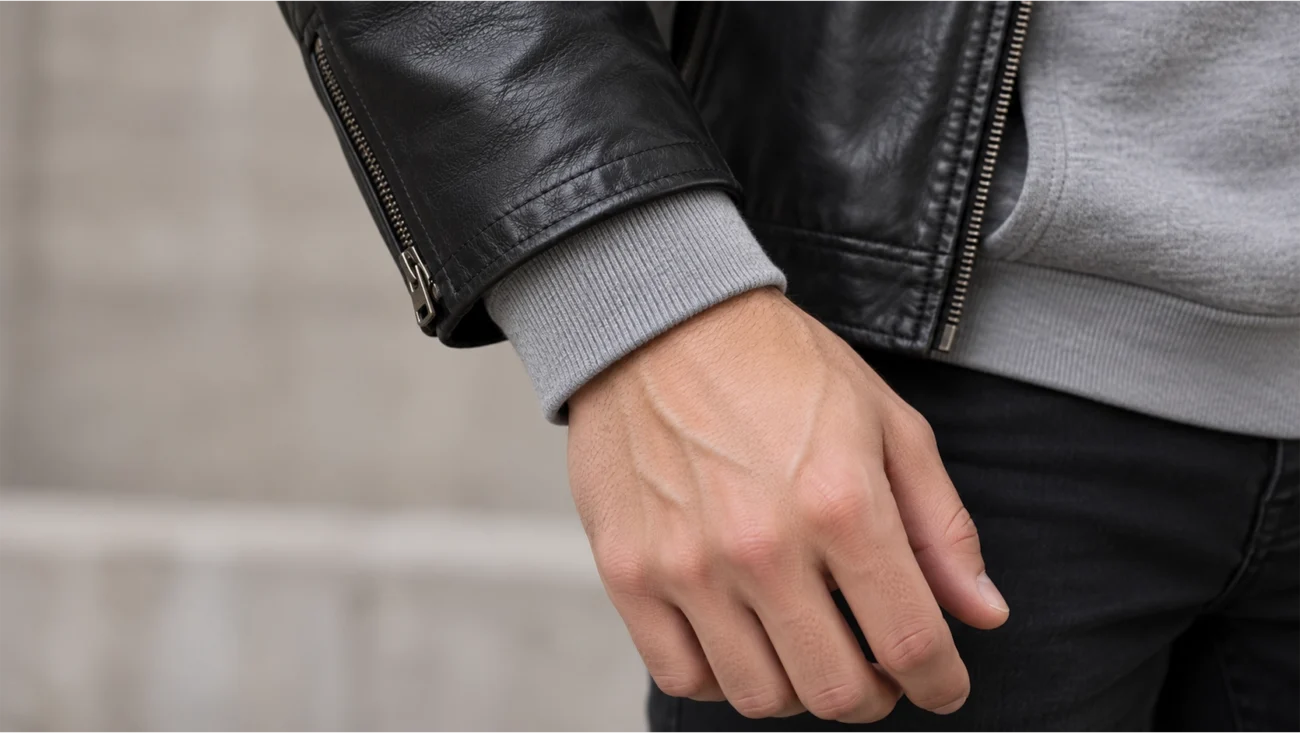
The Three-Mirror Check
Before you leave the house, check the outfit three ways. Front view: are the cuff reveals even on both sides? Side view: does the hoodie hem sit in a clean line, and does the jacket hang straight from the shoulder? Back view: is there any horizontal pulling across the shoulder blades? It takes thirty seconds and catches nearly every proportion error this guide describes. Fix one thing at a time, starting with the layer doing the most damage.
Color Theory for Layering Leather
Color is where a good fit becomes a good outfit. The leather jacket color guide covers undertones in detail; here are the three reliable layering strategies.
Monochromatic Stealth: Black on Black
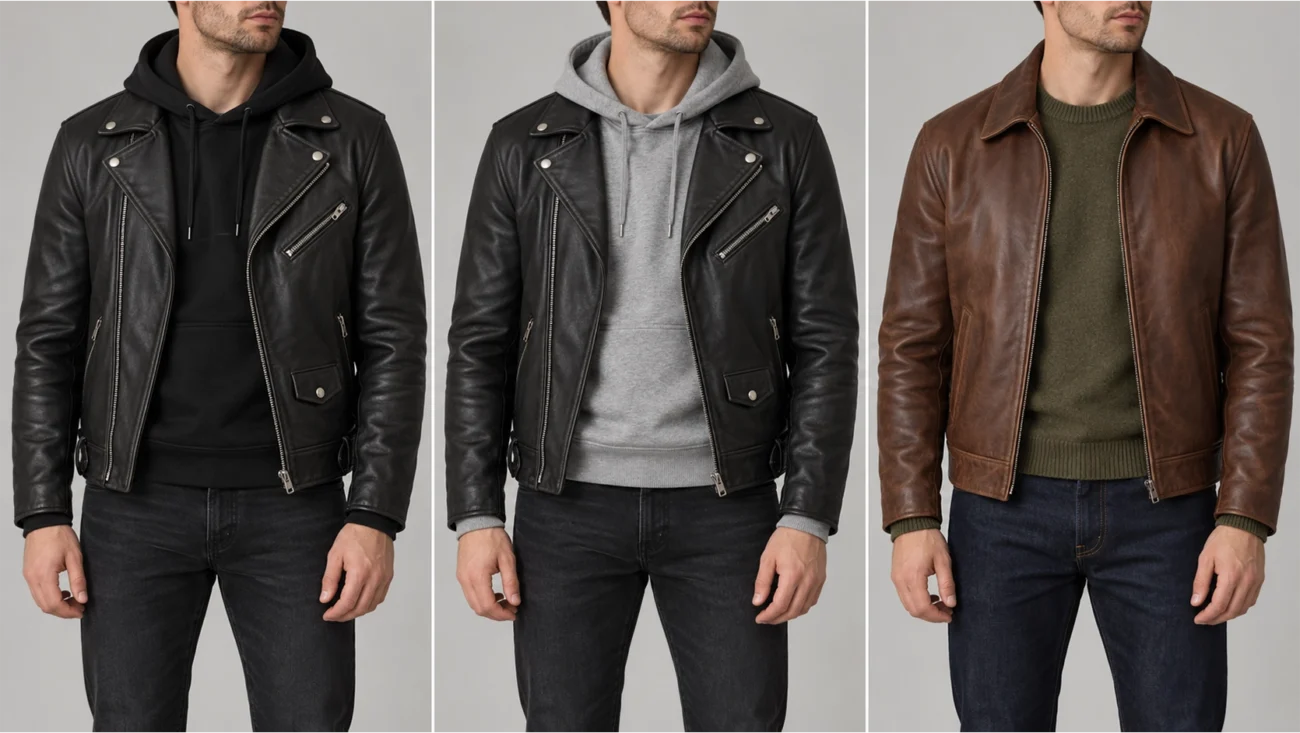
A black hoodie under a black jacket erases the visual boundary between layers, which slims the silhouette. The risk is a flat, shapeless look. Fix it with texture: matte cotton against glossy leather, or a ribbed knit. Dark, armor-inspired designs, such as Batman-inspired jackets, make the best case for this approach, since the whole aesthetic is tonal. For general black-leather outfit building, the guide to styling a black leather jacket goes further.
High Contrast: Heather Grey Under Black Leather
Heather grey is the most forgiving layering color there is. It separates the mid-layer from the jacket without clashing, and the mottled texture softens the contrast. It also makes the hem and cuff reveals visible, which is exactly the point. If your proportions are right, grey proves it. If they’re wrong, grey exposes it.
Earth Tones: Olive and Burgundy Under Brown Leather
Brown leather has warm undertones, so cool colors fight it. Olive, burgundy, rust, and cream knits sit comfortably against the hide and add depth without adding visual weight. Steer away from bright blue or stark white under mid-brown leather. The ideas in this guide to styling brown leather jackets show how these earthy pairings play out across outfits.
FAQs
Can I wear a hoodie under a leather jacket?
Yes, with the right silhouette. Double rider bikers and relaxed bombers handle hoodies well. Slim cafe racers don’t. Choose a French terry hoodie over fleece for a cleaner fit.
Should I size up my leather jacket for winter?
Size up one full size only if you plan to wear heavy knits or fleece most of the time, and confirm the shoulder seam still sits on the shoulder bone. If you also wear tees often, stay true to size.
What is the best sweater to wear under a leather jacket?
Fine merino wool or cashmere. They add warmth without bulk and slide easily against the lining. A thin crewneck or quarter-zip works with almost any cut.
Should the hood go over the jacket collar or stay inside?
On a double rider or bomber, laying the hood over the back of the collar is the standard streetwear look. On a cafe racer with a band collar, skip hoodies entirely.
How much of the hoodie should show below the jacket?
Hidden, or no more than about an inch. Anything longer reads as a mismatch in length and breaks the proportion.
Does a quilted lining make layering harder?
Yes. A quilted lining adds its own padding and reduces the room available for a mid-layer, so you may need to size up or use a thinner knit.


 Biker Jackets for Men and Women128 products
 Black Leather Jackets for Men and Women204 products
- Womens Cotton Jackets49 products
 Green Lantern Jackets3 products
 Beige Leather Jackets for Men and Women7 products
- Womens Satin Jackets105 products
 Men's Cotton Jackets118 products
- Womens Polyester Jackets12 products